AI Music and Royalties: The Battle for Fair Payouts on Streaming Platforms

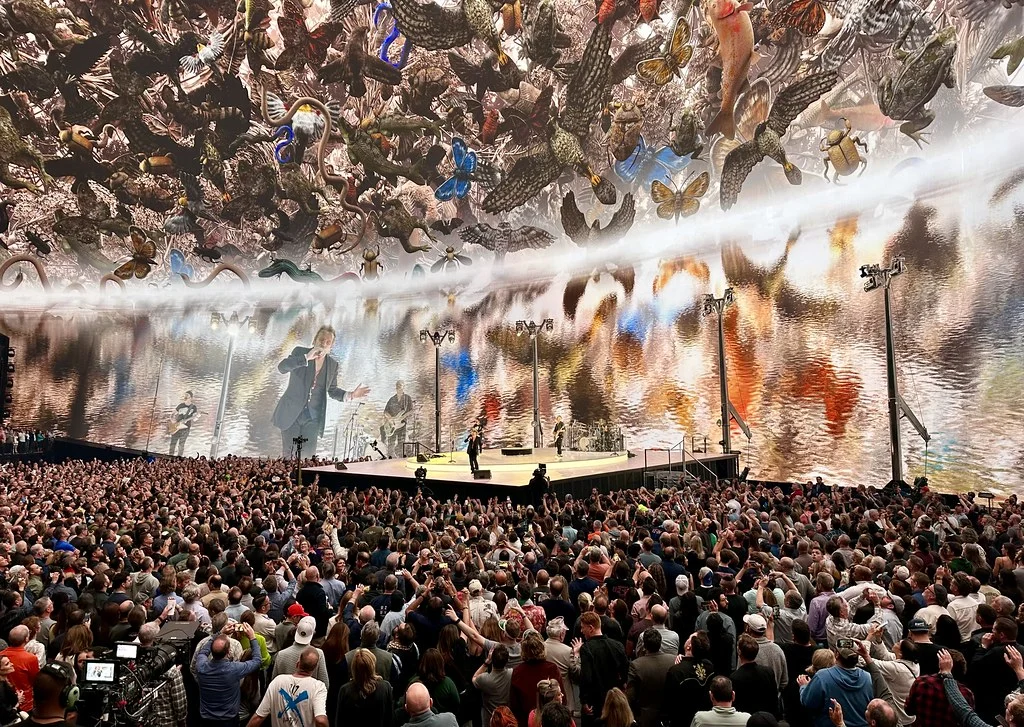
Photo: jurvetson · CC BY 2.0 · source
More than half of all tracks uploaded daily to the streaming platform Deezer are now generated by artificial intelligence. This figure, which reached 90,000 tracks per month in June 2026, clearly illustrates why many artists are concerned about their royalty earnings. The massive influx of AI-generated music dramatically dilutes the funds from which royalties are paid, pushing down the value of a single stream for every creator. This is a problem affecting the entire music industry and the broader creator economy.
How AI Is Changing the Royalty Game
Streaming services like Spotify, Apple Music, and Deezer operate on a shared pool principle. All subscription and advertising revenues are collected, the platform takes its share, and the remainder is distributed to rights holders based on their share of the total streams. This model was designed for a world where music creation and distribution involved significant costs and effort. AI has removed these barriers. Today, tens of thousands of tracks can be created and uploaded with minimal cost, leading to an exponential growth in the total number of streams.
Practically, this means that while the money pie grows slowly (global recorded music revenues grew 6.4% in 2025 to $31.7 billion), the number of 'eaters' is growing dramatically faster. Every newly added track, whether human or synthetic, reduces the value of a single stream for everyone else. This dilution effect is not theoretical; it is already evident in upload data and platform policies.
Beyond 'honest' dilution, there's also the problem of fraud. AI-generated music has become a tool for artificially generating streams to claim royalties. Forbes estimated that AI-generated music contributes to $4 billion worth of fraud, based on the fact that a track costs almost nothing to produce, and a stream longer than 30 seconds triggers a billable play. Deezer, for instance, found that up to 85% of streams of AI-generated tracks were fraudulent and subsequently demonetized.
The Numbers Behind Streaming Payouts and Platform Responses
Per-stream royalty rates vary significantly across platforms. In 2026, they range from approximately $0.0007 to $0.015 per stream. Tidal and Qobuz are among the highest payers, with roughly $0.012–$0.015 per stream and $0.015–$0.019 per stream, respectively, thanks to their focus on premium subscribers. In contrast, Spotify is at the lower end, paying $0.003–$0.005 per stream, and YouTube Music even less, at $0.001–$0.002 per stream.
It's important to understand that a higher per-stream rate doesn't always translate to higher overall earnings. While Spotify pays less per stream, its massive user base (31% of the global market) means a million Spotify streams can ultimately generate more revenue than 50,000 streams on Tidal. Total stream volume often outweighs the per-stream rate for most independent artists.
Platforms and distributors are actively responding to this situation:
- Tidal, as of July 15, 2026, pays zero royalties for tracks identified as fully AI-generated and blocks their direct-to-fan sales. This marks the first time a major streaming service has gone this far in demonetizing AI content.
- Deezer tags AI-generated tracks and removes them from algorithmic recommendations and editorial playlists, significantly limiting their organic reach and ability to generate revenue.
- YouTube clarified its monetization policy, effective July 16, 2026, to restrict earnings from 'generic or repetitive content,' 'unsatisfying or off-putting content,' and content featuring 'fake AI experts.' This is not an outright ban on AI but a fight against low-effort content that lacks genuine value.
- Distributors are introducing penalties for artificial streaming, requiring disclosure of AI-generated tracks, and filtering submissions to prevent fraudulent content from reaching platforms.
What This Means for Artists and Navigating the New Landscape
I see a clear shift: while technological advancements facilitate easier music creation, they also exert pressure on the value of artistic work. For artists striving to make a living from their craft, this means a necessary re-evaluation of their strategy. In my experience with clients, relying solely on streaming royalties is increasingly risky today. Without actively building a community and diversifying income, achieving a sustainable model is challenging.
Decision Criteria for Artists in the AI Era
| Criteria | Traditional Streaming Model (Past) | Model in the AI Era (Today) | | :---------------------------- | :--------------------------------- | :---------------------------------------------------------- | | Primary Income | Streaming royalties | Mix of streams, direct sales, subscriptions, merchandise | | Quality vs. Quantity | Quantity for 'algorithm' | Quality, originality, and human touch for fan engagement | | Role of AI | Background, not addressed | Assistant for creation, not primary content generator; with transparent labeling | | Fan Interaction | Passive | Active community building, exclusive content, direct communication | | Importance of 'Niche' Platforms | Low | Growing for higher per-stream rates (Tidal, Qobuz) and direct sales (Bandcamp) |
If artists fail to adapt, they risk their work being drowned in a flood of low-quality content, and their royalties will continue to decline. The consequence of inaction is a loss of motivation and an exodus of talent from the industry, which would impoverish the entire cultural scene. We believe talented creators deserve fair compensation for their work, and that's precisely what we help with at onemanager.art. We assist artists in understanding and optimizing their digital monetization strategies and building sustainable careers beyond mere streams.
Action Plan for Artists:
- Audit Your Income: Understand where your money truly comes from. Not just total sums, but the proportion from individual platforms and income types.
- Diversify: Don't rely solely on streams. Consider direct music sales (e.g., via Bandcamp), subscriptions (Patreon), merchandise, live performances, and courses.
- Build Community: Engage directly with your fans. Offer exclusive content, communicate with them, and build a loyal fanbase willing to pay for your work.
- Use AI Wisely: Employ AI as an assistive tool (e.g., for mastering, idea generation), not for mass-producing generic content. Always maintain creative control and originality.
- Monitor Policies: Keep track of changes in monetization rules by streaming platforms and distributors to avoid demonetization.
- Optimize for Higher RPM: Where it makes sense, direct your fans to platforms with higher per-stream rates, even if they have a smaller reach.
If you're grappling with these challenges and seeking a strategy to maximize your income and protect your artistic value in the digital age, consulting with an expert can be a sensible next step. This could be an internal decision to change your strategy or seeking a partner to help you with comprehensive management of your digital presence and monetization.
FAQ
Q: What is 'royalty dilution' and how does it affect artists? A: Royalty dilution is a phenomenon where a massive influx of content, especially AI-generated, increases the total number of streams while the royalty money pool grows slower. This lowers the average value per stream, meaning artists receive less money for the same number of plays compared to the past.
Q: What are the main differences in payments between streaming platforms? A: Platforms like Tidal and Qobuz, which focus on premium subscribers, typically pay the highest per-stream rates (up to $0.019 USD). Spotify and YouTube Music, with a large proportion of free, ad-supported users, pay significantly less (around $0.003–$0.005 USD and $0.001–$0.002 USD, respectively).
Q: Does this mean AI music is bad for artists? A: Not necessarily. AI as an assistive tool can help in the creative process (e.g., idea generation, mastering). The problem arises when AI is used for mass production of low-quality, generic content that floods platforms and dilutes royalties. Platforms are trying to differentiate between these two approaches.
Q: How can I protect myself against fraudulent streams? A: Platforms and distributors are actively fighting streaming fraud. As an artist, you should work with reputable distributors who have fraud detection systems and monitor your stream analytics to identify suspicious activity. You should also transparently label AI-generated content if you use it.
Sources & references (6)
- https://vertexaisearch.cloud.google.com/grounding-api-redirect/AUZIYQGDAHeVSvS50toYKo_P3zNxZnSBMQjAaIfHsvb5h7JC7niI3UUz6H5w1xHxHCm0VdoY2IfZ1orJ-LxLFA8zM1XJNCiNG_VnaPqeWbtcxTGOhh9XRfV4qqGPAooIKkkWEOcNggKe9O2YgWYUR6W-xadVd0nyaI4zOwqK5LO03tmWaytXFe2RRMB1goaYO0Ihzf73VXBvCeBT3H7uMB2AAANZnJrw02UoQEzP95jcxdl5wA_-HdF9WrPpVK67HgOE1J-u7V2VzYwKhoq5gOMnerCKADsWeNii_w9w
- https://vertexaisearch.cloud.google.com/grounding-api-redirect/AUZIYQGl_XRGtuNstg7avXTuGyJcTl4_nAPxr3KGNRBB6NchpYZDEMmgB4lpPwpinfmWUrKPLWQlxBgjJPtrNw-hQyXuQYVAKI67WdlvC-Ob1UqC2ZBFG34riGfaPN-HJgghpbUB6tTF3OPlKXp7DbcY5rgcn7CQq-fFMLfLEF2VbfhCR0RGXKfx-bGDeRrX
- https://vertexaisearch.cloud.google.com/grounding-api-redirect/AUZIYQGz43twrJK06D-RdyUXlOagKQzmLCaDWIApaGakM1ft0vhlsfBWokvCh-KRN_YFN3vQs7t1Wi76zvO6fPKwhQ0nOVB1Q_1NpTcB6SWMnzYA2KbuERTJlRUuhz8CoB6S2oE7y_1VjPqauBEUmwmHHzHfF8dGYsBE6ZCOJ1ENOo3B_SN14iVeHbyevTrjvwRaLmeWznDq_HyOIjjR6OzASrsHBiQE7l-I2Qmlp_1v3NLn0znPMtlPww==
- https://vertexaisearch.cloud.google.com/grounding-api-redirect/AUZIYQHHwM68G-PWBbBiRBKTOY4BOoDSiI4b73qiuauyQOpcUBkUGCIVAksNXHnIRm83GdBUjCE_xbPEHhowAkA_eRydma-kxQiJ-BdEzu24nSnBwesOOwlBA69nnA8nIhRcD-zcU-B-SxU3rWNYB2ZmOEHp2Gf-gmhhUQC4pe0evRSmClSPfS-LIm1Umw5sUhMPh_nS8fo7K0Pv__WRPdgjmIbPmAFygASc=
- https://vertexaisearch.cloud.google.com/grounding-api-redirect/AUZIYQFnJKeVAS_azcGnYm1VTQbl-hIxf_vv0pPFPP2ZI_TRpvvnVokILXTkWw5-nwIkM4Kf6g9x7dn96ixUg6K01Q-PEpzQhHYiRqvem_iOKvA1NTd6ZSeIgpEv34SRtqnFMOwqdUgHWUWSk_gdmmO15BED41OjthYh4B6BnLkHdlTNAbtyTg==
- https://vertexaisearch.cloud.google.com/grounding-api-redirect/AUZIYQHSQfUJf0wL4TY-B9N3pZuB4h2wt5Jp5b2Cl70boS4uFoRpMcD0--UMmvi5QBbeDoIeviyUxKgr3zeFKFWwEy5nhViXMFQRFxBSX0mQ3VYTOJ3GK6i1bcsn7aWNEarocmCyin-XIZ8=
You might also like
 Live Culture & EventsEnd of Hidden Fees: EU Pushes for Ticket Sales TransparencyThe European Union is tightening regulations on ticket sales to eliminate hidden fees and unfair practices. What does this mean for event organizers and fans in 2026?Srp 1, 2026
 Live Culture & EventsTech for Greener Events: The Future of Festivals and ConcertsHow is technology transforming the event industry towards sustainability? Explore digital ticketing, renewable energy, and AI to reduce ecological footprints.Srp 1, 2026
 Live Culture & EventsBlockchain and AI Agents in Ticketing: End of the Black Market, or a New Era of Speculation?Blockchain and AI agents are transforming ticket sales. Explore whether they lead to a fairer market or just more sophisticated speculation and how to prepare.Čvc 30, 2026
Where is your marketing burning money?
AI audit and implementation for business owners. From diagnosis to deployment.
Get an audit