Custom AI Agents: Moving from Experimentation to Measurable Advantage
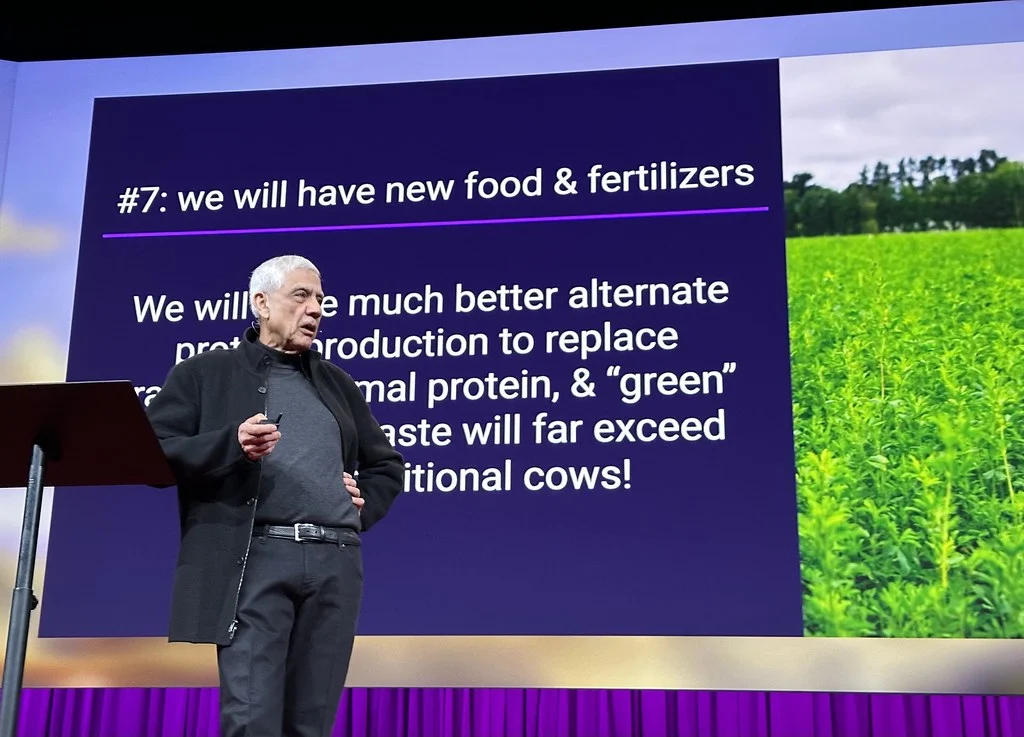
Photo: jurvetson · CC BY 2.0 · source
Most marketing teams today use AI. According to McKinsey's 2025 Global Survey on AI, 62% of organizations are already experimenting with AI agents. Another 2026 study shows that 75% of marketers use AI in some part of their workflow. Yet, 84% of them still run generic, undifferentiated campaigns, and 51% cannot track the ROI of their AI projects. This discrepancy is alarming and reveals a crucial point: the efficiency gained from general AI tools quickly becomes a baseline, not a long-term competitive advantage. The real shift lies in how companies build their own data-driven AI agents and integrate them into their marketing stack. The strategic question is changing from “How do we deploy AI?” to “How do we build AI capabilities competitors cannot easily replicate?”.
Why Generic AI Tools Are No Longer Enough
Generic AI tools are designed to cover a wide range of common use cases across industries. This makes them accessible and relatively straightforward to deploy. The problem is that their broad design limits differentiation. When everyone relies on the same solutions, the advantage quickly erodes. My experience tells me it's like having the latest model of a company car: it's nice, but it doesn't drive itself, and you won't outpace the competition with it.
Companies relying solely on off-the-shelf solutions often encounter:
- Similar AI Capabilities: Competitors have access to the same tools and features.
- Limited Differentiation: Standardized models offer minimal room for distinction.
- Data Governance Complexity: With sensitive data and compliance requirements (e.g., GDPR), issues arise if AI tools are not deeply integrated into internal systems.
- Data Fragmentation: Data is scattered across dozens of platforms (CRM, analytics, social media), preventing AI from seeing the full picture and making effective decisions. The average B2B marketing stack today uses 28 tools, with enterprise estimates running up to 75. Moreover, up to 44% of these stacks are underutilized.
From Tools to Architecture: Building an AI-Native Marketing Stack
The true value of AI emerges when marketing teams move beyond merely using isolated tools to building a connected AI architecture. This doesn't mean discarding everything you have, but rather rethinking how data and intelligence flow between systems.
What is an AI-Native Marketing Stack?
It's a connected architecture where data, models, orchestration, and engagement layers read from a shared context and feed results back into it. Instead of a 'catalog' of individual tools you try to piece together, it's a cohesive system that continuously learns and adapts. Without such orchestration, even the best AI tools operate in isolation and yield only mediocre results.
Key Layers of an AI-Native Stack:
- Data Layer: High-quality, unified, and proprietary data is the fuel for AI. This includes CRM, CDP, campaign data, website data, social media, and other internal sources. Without this layer, any AI is blind.
- Model Layer: This is where your AI models reside – whether fine-tuned foundational models (LLMs) or specially trained models for specific tasks (e.g., customer behavior prediction, ad copy optimization). The goal is for models to leverage your unique data for unique outputs.
- Orchestration Layer: The most underestimated, yet critical part. It ensures that AI systems complement each other, share context, and automatically trigger actions across platforms. For example, a surge in high-intent website behavior can immediately adjust bids in paid advertising.
- Interaction Layer: The channels through which you communicate with customers (email, social media, web, chatbots) and where AI results flow. This is where the personalization and relevance enabled by AI become apparent.
Custom AI Agents: From Theory to Measurable ROI
AI agents are autonomous software systems that analyze data, make decisions, and perform actions across platforms with minimal human oversight. Unlike traditional automation, which follows rigid rules, AI agents can reason, adapt to changing conditions, and coordinate activities.
When do Custom AI Agents Make Sense?
- Complex Operations: Marketing operations span multiple platforms and data sources.
- Tailored Decision-Making: You need tailored decision-making logic, not generic recommendations.
- Revenue-Critical: AI is expected to support workflows critical for revenue generation.
- Competitive Differentiation: Building unique AI capabilities is a priority.
Case Studies and Hard Data
Practice shows that investing in custom AI agents pays off. According to Kemeny Studio, AI marketing automation (using agents) delivers a return of $5.44 for every dollar invested, which is 4.1 to 5.3 times more than traditional strategies.

- Netflix: Their recommendation engine, which influences over 80% of the content users watch, saves the company an estimated over $1 billion annually by reducing churn. A targeted program focusing on at-risk users led to a 6% drop in cancellations over three months.
- Sephora: Their AI-driven Beauty OS system integrated predictive customer lifetime value modeling, AI product recommendations, and virtual try-on. Customers using the virtual try-on feature converted at 3x the rate, cross-category purchases increased by 47%, and overall customer lifetime value jumped by 29%. Marketing content production costs were reduced by 38%.
- JPMorgan Chase: They used the Persado AI platform to optimize ad copy, which boosted click-through rates (CTR) by 450%.
- Czech Republic: A 2026 study focusing on AI application in marketing by a selected South Bohemian digital agency showed that AI positively impacted campaign performance, contributing to more efficient budget allocation and improved conversion results.
AI agents also significantly accelerate internal processes. Marketing teams using them report 73% faster campaign development and 68% shorter content creation timelines.
How to Do It: A Checklist for Implementing Custom AI Agents
There's no universal blueprint, but a proven approach often starts with targeted, high-value workflows where proprietary data offers clear differentiation potential.
Checklist for Strategic AI Integration:
- Data Readiness: Do you have high-quality, unified, and accessible data that AI agents can use? Is your data ready for secure and governed AI utilization?
- Identify Priority Workflows: Which marketing processes are most costly, most prone to errors, or have the greatest potential for differentiation? Start with 1-2 high-impact use cases.
- Define Clear ROI Metrics: How will you measure success? Measure not just time savings, but direct impact on business outcomes (e.g., increased conversions, reduced customer acquisition costs, increased LTV). Remember that meaningful ROI requires a 6-12 month measurement window.
- Integration with Existing Stack: How will AI agents connect with your existing CRM, CDP, analytics, and advertising platforms? Prioritize native integrations over point solutions.
- Human Oversight and Governance: How will you ensure that AI agents act in alignment with your brand and ethical standards? Who will oversee their outputs and decisions?
- Team Training and Adaptation: Are your marketers ready to collaborate with AI agents? New roles, such as “AI orchestration leads” or “agent supervisors,” will be crucial.
Consequences of Inaction and the Next Step
If companies fail to move from generic AI tools to building their own deeply integrated AI agents, they risk remaining in 'pilot purgatory,' where 95% of enterprise generative AI pilots yield zero P&L impact. They lose the chance for a true competitive advantage. Competitors who strategically invest in AI architecture and custom solutions will gain an edge in speed, personalization, and efficiency. As Gartner indicated, over 40% of agentic AI marketing projects will be canceled by the end of 2027 due to unclear ROI. This points to the fact that the problem is not the technology itself, but how it is deployed.
It's not enough just to use AI. It needs to be strategically integrated, and custom solutions need to be built that leverage your unique data and processes. If you're unsure how to start building your own AI agents or how to evaluate and optimize your existing marketing AI stack, it's time to consult with someone who has real-world experience. You can start with an audit of your current data architecture and identify initial high-impact workflows where AI agents will bring the greatest benefit. This is precisely what we help clients with at one-AI-agent – transforming experiments into measurable business results.
FAQ
What is the difference between an AI tool and an AI agent?
An AI tool is typically an application that assists with a specific task (e.g., generating text or images). An AI agent is an autonomous system that can analyze data, make decisions, and perform multiple steps across various platforms with minimal human intervention, based on defined goals.
Why is AI integration into the marketing stack important?
Integration ensures that different AI tools and agents share context and data, enabling more cohesive and effective marketing operations. Without it, tools operate in isolation and cannot maximize their potential for personalization, automation, and campaign optimization.
What are the biggest risks when implementing AI agents?
The biggest risks include insufficient data readiness, unclearly defined goals and ROI metrics, lack of human oversight, and inadequate integration with existing systems. These can lead to projects failing to deliver expected results or being canceled.
How much does it cost to build a custom AI agent?
Costs vary depending on complexity and scope. While a minimum viable AI marketing stack can start at hundreds of dollars per month, an enterprise solution with dedicated attribution and orchestration platforms can cost thousands of dollars per month. It is important to invest in data quality and the right architecture to ensure a return on investment.
Sources & references (6)
- https://vertexaisearch.cloud.google.com/grounding-api-redirect/AUZIYQEYRQX15fKaOSCebqKhzD2v49XV3DS4NXuBdsoIOMRChMdMfcOEq36IaZxoVS9TGHmoiFXGjP7BfU55vCX1NXeXYGCIzHMYwHg7NaSuJJMs1MMs8prw1PkeLgqHBqai1pk-P9VOJowjPJ2TBheSCvI1V7S8-5qqT76ugVlnPTLILAmH-2SAx5P3SspQ7ECqSnYI15-LThD42HyMavRx2sqku2Hqw4UEkBuiXUc=
- https://vertexaisearch.cloud.google.com/grounding-api-redirect/AUZIYQHVs11cVtKZcp-jDkskhhnJq5ea_GOuabNOhoT57lpX-O2WAdk1t5Umj1ptHmMnV8VG3zO18N6lU4BhVKVVeieHlWN3K3fZf-glE4DguQehn7UuEwLZdaPoS_9ITYp0rB_jx5WY-B4xvWQ_SX6woZD8NsiFfDsf4XHc=
- https://vertexaisearch.cloud.google.com/grounding-api-redirect/AUZIYQEs3NAGby5QsHmu4LuRMXgt9we7lp9JQWgr88ix8Mcd_xj-QZK5bD33ahSOiWHWH0_zwfIs4Uvd1EEONIUUVjLqc7eH80yJfHuUvr5ShloWSKA4Kp3U7MUhL9-OeCelLskH6d3jGJe9u0eeB1E7aplAOgDF4_qC-2WtN05lheYHV_A=
- https://vertexaisearch.cloud.google.com/grounding-api-redirect/AUZIYQGGMATSLrKmE6eCAbu_Ns6WynqS9cZHTfSG3LlYmfu3XLDgj6d0chVptppsv3BKY-HtPVPYzR-5r8r3o1f0dpEuKivc1-wB-67NX3P_vPJomJtAompdPU7N7n2OWLdr4z6Ekz0RsKRXZUrNyK1rKEgoWpyGrjEV0j5EDpjpsvJyPrf-f3Gg2dcOJpgZcQ==
- https://vertexaisearch.cloud.google.com/grounding-api-redirect/AUZIYQELe7VjX9DVT12UVYMdfnWtVr-XhMlhD6N_vi02GAv6mEmV3WjlULE1P-9TKePJMYAPoY8RmqLQOStqZlPHWV6ijs4UlLPA14fwCcRTjxuYEaHW79Q35bianAmKVaQjeIJErR8_FJZVjzs4nw3pKS32oyJbi8jVaZ4B=
- https://vertexaisearch.cloud.google.com/grounding-api-redirect/AUZIYQGHxVjr8HwPebFrAPtPjODy6LbSGYwNAMqamL9HOx5j0-zA18lICYEL4xSSLOD8IjtJYXn9Eg02DFASAl1svzmFx0GuoqEukJDVkMr78RamL3QAxMzHYhm0aB_R5AYIYws3mSkmwOrK6OdVuMGTHj7qE3mV=
You might also like
 AI & MarketingGemini Ultra 2.0: How Google's New AI is Reshaping Marketing Analytics and PredictionGoogle Gemini Ultra 2.0 revolutionizes marketing analytics. Discover how multimodal AI and long context improve customer behavior prediction and transform ROI.Zář 20, 2026
 AI & MarketingAI is Reshaping Marketing: From Automation to Human Strategy and ROIArtificial intelligence is transforming marketing roles. Discover how we're moving from automation to strategic partnership and how to measure the true ROI of AI investments.Zář 17, 2026
 AI & MarketingHyper-Personalization with AI: Balancing ROI and Ethics in MarketingAI is transforming marketing hyper-personalization, but ethical challenges loom. Discover how to achieve high ROI while building customer trust.Zář 15, 2026
Where is your marketing burning money?
AI audit and implementation for business owners. From diagnosis to deployment.
Get an audit