The KIDS Act and AI: Reshaping Children’s Digital Safety on Social Media
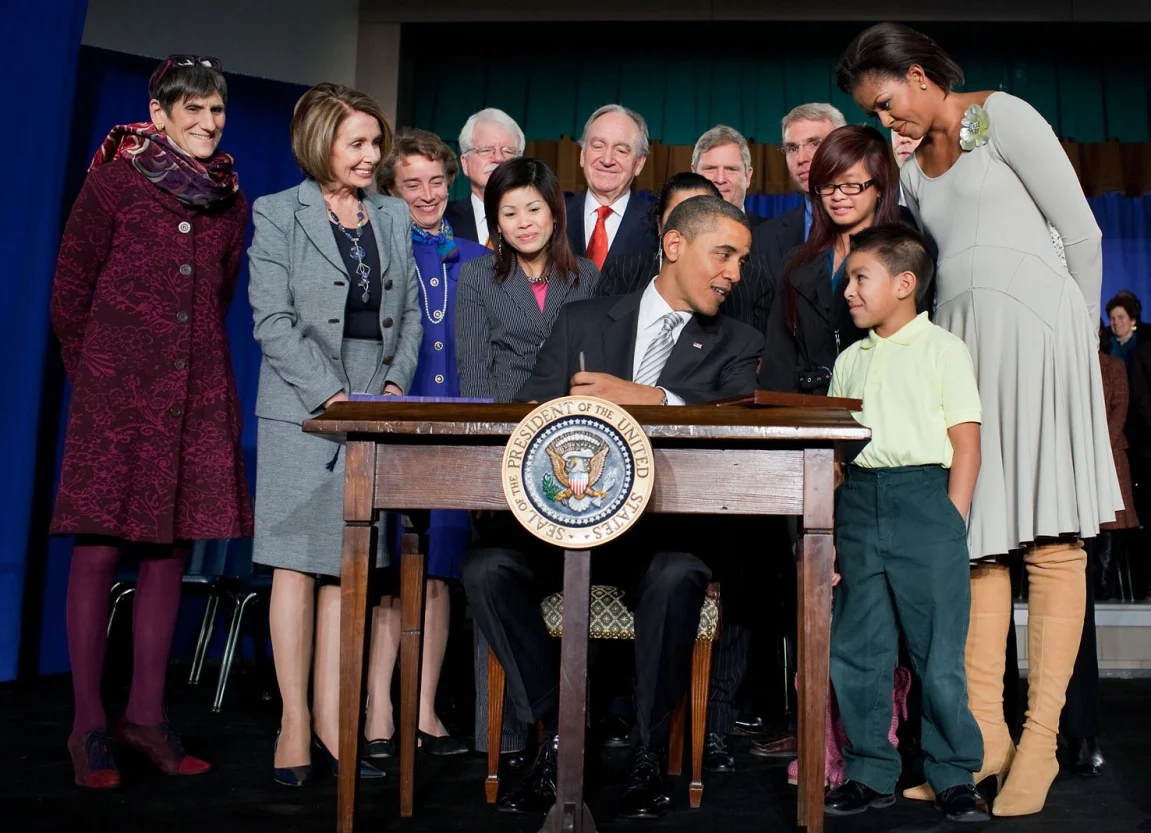
Photo: Nancy Pelosi from San Francisco, CA · CC BY 2.0 · source
The recent passage of the US Kids Internet and Digital Safety Act (KIDS Act) by the House of Representatives marks a significant milestone in efforts to protect children in the online environment. This legislative package, combining fourteen proposals, imposes new and complex requirements on social media and technology platforms. Alongside these legislative changes, there is an intense development of technologies, particularly artificial intelligence, designed to help meet these demands. This creates an entirely new landscape of digital safety that will affect everyone who operates online.
What the KIDS Act Brings and Why it Matters
The KIDS Act, passed on June 29, 2026, is an ambitious attempt to create comprehensive federal legislation on child online safety. Its goal is to protect children and adolescents from potential harm on social media and in the broader digital space. Key aspects of the Act include:
- Age Verification: Platforms will be required to implement reliable mechanisms for verifying user age. This is crucial for ensuring that minors do not access inappropriate content and are offered age-appropriate services.
- Restrictions on Targeted Advertising: The Act limits the ability of social media platforms to use data from minors for targeted advertising, thereby reducing the risk of commercial exploitation of their attention.
- Protective Features and Default Settings: Platforms will need to implement default settings that maximize children's privacy and safety, and provide parents with tools to monitor and manage their children's accounts.
- AI Chatbot Transparency: The KIDS Act also mandates that AI chatbots clearly inform users they are not interacting with a human and provide mental health resources.
This legislation is a response to growing concerns about the impact of social media on children's mental health and the risks associated with online predators and inappropriate content. The United States is thus joining a growing number of countries and regions, including the European Union with its Artificial Intelligence Act, that are striving to regulate the digital space to protect the most vulnerable users.
AI as the Key to Age Verification: Hopes and Pitfalls
With new legislative requirements, technology companies are turning to artificial intelligence as a primary tool for age verification. A recent multi-billion dollar settlement by Meta with 48 U.S. states, addressing allegations of harming children's mental health, commits the company to strengthen age-checking technologies using AI and third-party tools, including regular external audits. The goal is to significantly increase the identification and removal of underage accounts.
How it works in practice:
Platforms are experimenting with various approaches that combine:
- ID Uploads: Users can upload government-issued IDs or other documents. Meta, for example, states it deletes these IDs within 30 days.
- AI Facial Analysis: AI technology can estimate age based on facial features. Roblox, for instance, stated last year that for the 5–25 age group, its system can estimate age within one to two years of accuracy.
- Behavioral and Content Analysis: AI combines visual data with analysis of text and interactions to identify potentially underage accounts.
Despite advancements, AI-driven age verification faces significant challenges. One of the biggest is privacy protection. The requirement to upload personal documents or biometric data raises concerns about data breaches and misuse. Another issue is effectiveness and circumvention. VPNs and false information can easily bypass less robust systems, leading to proposals for legislation banning VPNs in some U.S. states.
There's also the risk of "false positives," where an adult user is incorrectly identified as a minor, and vice versa. Meta, in its agreement, committed to addressing these issues and conducting regular audits to minimize errors.
What This Means for Parents and Schools
New legislation and technological efforts create a complex environment that parents and schools must navigate. For me, it's crucial not to be lulled into a false sense of security. Laws are important, but technology evolves faster than regulation, and there will always be loopholes.
Practical Checklist for Children's Digital Safety:
As a parent or educator, you can take the following steps to maximize children's online safety:
- Check Privacy Settings: Regularly review and adjust privacy settings on all platforms your children use. Set the strongest possible protection.
- Utilize Parental Controls: Activate parental control tools offered by platforms. Many state laws (e.g., the New Jersey Kids Code Act) require platforms to offer robust parental controls, including disabling location sharing and limiting notifications.
- Educate Children: Explain the risks of the online environment, the importance of verifying information (especially AI-generated content), and the significance of protecting personal data.
- Talk to Them: Maintain open communication about their online activities. Be interested in what they do, who they communicate with, and what problems they face.
- Be a Role Model: Use technology responsibly and with privacy in mind yourself.
Authorial Judgment: Balancing Protection and Freedom
I believe that efforts to regulate the online environment for children are necessary and welcome. However, it is crucial to strike a balance between protecting children and preserving their privacy and freedom of expression. Overly invasive age verification, requiring government IDs or biometric data for every online service, could stifle anonymous speech and increase data breach risks. Instead of pervasive surveillance, the focus should be on designing platforms that are safe by default and on effective digital education. The key is to enhance the digital literacy of both children and parents so they can navigate the online world themselves, rather than relying solely on technical barriers that can always be circumvented.
Consequence of Inaction and Next Step
If we, as a society, fail to actively address children's digital safety – whether through legislation, technological development, or education – we risk exposing them to increased cyberbullying, encounters with predators, social media addiction, and harm to their mental health. Data shows that sixty-two percent of organizations that ignored poor data quality lost revenue due to issues like missed renewals or inaccurate forecasts. While this figure relates to marketing data, the analogy is clear: ignoring 'bad data' about child safety leads to real and often irreversible losses in their lives.
The issue of children's digital safety is complex and rapidly evolving. In a situation where general guidelines are insufficient and regulations struggle to keep pace with technological advancements, the help of an experienced partner is invaluable. Through the onesafety project, we help schools and parents with prevention, crisis situations, and building digital literacy, which is the foundation for true protection. It's not just about what laws prohibit, but primarily about what we teach children. I recommend starting with a detailed audit of digital habits in your family or school and an open conversation about the risks and opportunities of the online world.
FAQ
What is the KIDS Act and how does it affect social media?
The KIDS Act is a US federal law passed in June 2026 that imposes new obligations on social media platforms for child protection. It includes age verification, restrictions on targeted advertising for minors, and the requirement for chatbots to disclose AI interaction.
How does AI help with age verification on social media?
AI is used to estimate age from facial photos, and analyze user behavior and content. Major platforms like Meta are investing in AI technologies and third-party tools to more effectively identify and remove underage accounts.
What are the main challenges of AI-driven age verification?
Key challenges include user privacy protection when collecting biometric data, the possibility of bypassing systems (e.g., using VPNs), and the risk of false positive or negative results that can lead to incorrect age identification.
What can parents and schools do to enhance children's digital safety?
Parents and schools should regularly check privacy settings, utilize parental controls, educate children about online risks, and maintain open communication about their digital activities. Digital literacy and critical evaluation of online content are crucial.
Sources & references (6)
- https://www.iapp.org/news/a/us-house-passes-the-kids-act/
- https://en.wikipedia.org/wiki/Kids_Internet_and_Digital_Safety_Act
- https://apnews.com/article/social-media-age-verification-kids-meta-ai-012574e4443ee9e20a0058b8849646c8
- https://www.natlawreview.com/article/new-jersey-enacts-kids-code-act-online-interaction
- https://www.congress.gov/bill/119th-congress/house-bill/7757
- https://www.ageverificationproviders.com/social-media-laws/
You might also like
 Child Online SafetyMeta's Billion-Dollar Fine: Will Social Media Change for Kids?A New Mexico court ordered Meta to pay nearly $1 billion and redesign platforms due to their impact on children. What does this mean for online safety?Srp 22, 2026
 Child Online SafetyDigital Kidnapping on Gaming Platforms: How to Protect Children?Online gaming presents a new threat of digital kidnapping. Learn how to recognize warning signs and effectively protect your children on gaming platforms.Srp 21, 2026
 Child Online SafetyAge Under Control: How Online Age Verification Works and Fails in 2026Discover how age verification protects children online in 2026, its limitations, privacy risks, and how to navigate the pitfalls. From EU Mini-Wallet to the UK Online Safety Act.Srp 18, 2026
Where is your marketing burning money?
AI audit and implementation for business owners. From diagnosis to deployment.
Get an audit