Social Media Algorithms and Youth Mental Health: A Global Call for Transparency
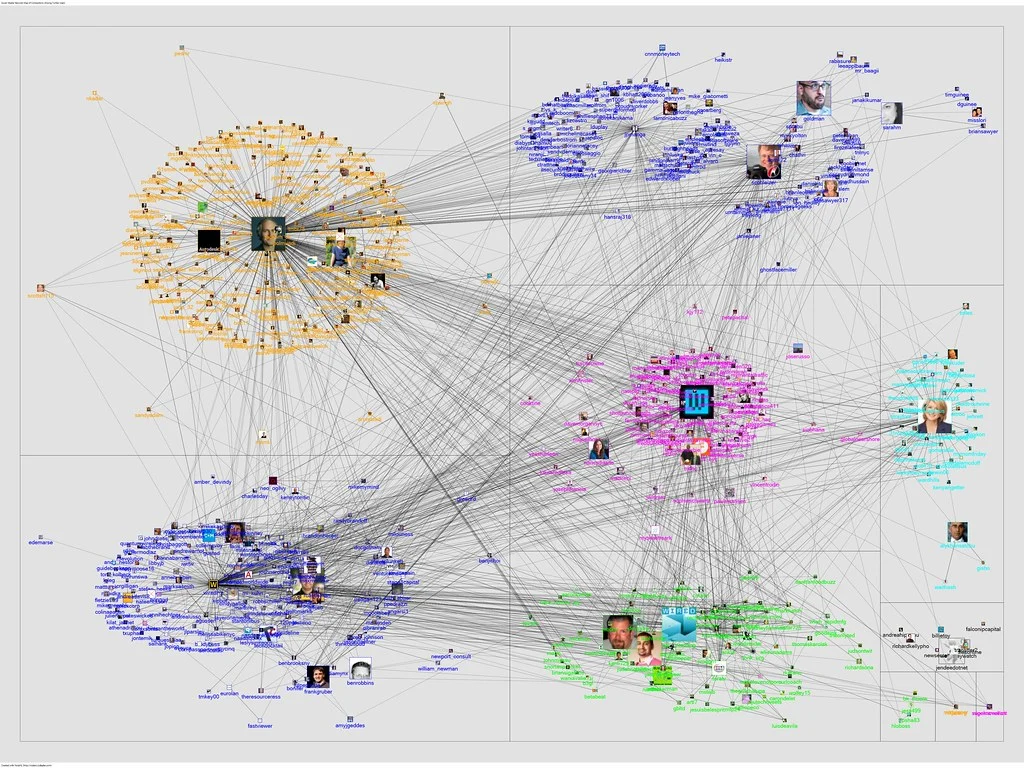
Photo: Marc_Smith · CC BY 2.0 · source
Last week, the European Parliament once again underscored the urgent need to increase transparency of social media algorithmic systems and implement stricter measures to protect children online. This call comes as pressure mounts globally on tech giants to take greater responsibility for the impact of their platforms on the mental health of young users. It's no longer just about the time spent online, but about how these platforms are designed and how their algorithms actively shape the experiences of children and adolescents.
How Algorithms Impact Young Users
Social media networks are designed to maximize engagement. They use mechanisms like infinite scrolling and autoplay to create addiction loops, tapping into psychological tendencies for reward and validation. For developing brains of children and adolescents, this can have profound effects. Algorithms can amplify extreme content, create echo chambers, and expose young people to unrealistic ideals, leading to feelings of inadequacy, anxiety, and depression.
According to a 2023 advisory from the U.S. Surgeon General, up to 95% of youth aged 13–17 use social media, with over a third reporting 'almost constant' use. This advisory highlights that while more research is needed, a growing body of evidence points to potential harms, especially in areas like exposure to harmful content and excessive, problematic use. A recent World Happiness Report also states that social media, as currently designed, is harming adolescents at a massive scale.
However, it's crucial to acknowledge the nuances. A July 2026 study from Karolinska Institutet, for instance, suggests that the amount of time Swedish teenagers spent on social media might not be the decisive factor in developing depression or anxiety five years later, when accounting for prior mental health issues and other background factors. Some psychologists, like Candice Odgers, even argue that social media is 'one of the least influential factors' and that bans distract from bigger issues. Yet, the potential for algorithms to exacerbate these problems cannot be ignored.
Growing Pressure for Regulation and Transparency
Global pressure for algorithmic transparency is intensifying. In the European Union, the Digital Services Act (DSA) is a key tool, requiring very large online platforms to mitigate risks to children, including those stemming from interface design and recommender systems. Furthermore, the European Commission has received recommendations from an expert panel suggesting that platforms should be required to demonstrate their services are safe for children 'by design,' rather than regulators having to prove harm. This would mark a significant shift in accountability.
In the United States, Senator Edward Markey has introduced legislative proposals such as the Youth AI Privacy Act, which would establish design rules for AI chatbots interacting with minors, and COPPA 2.0, extending privacy protections to teenagers aged 13–17. Discussions are also ongoing regarding the 'Kids Off Social Media Act,' which would prohibit social media for children under 13 and protect minors under 17 from algorithmic targeting. These initiatives reflect a broader effort to shift the burden of responsibility from parents and children to the tech companies themselves.
The American Psychological Association (APA) also urges developers to prioritize features that protect young people from manipulation and the erosion of real-world relationships. They emphasize that 'AI is neither inherently good nor bad,' but it is critical for developers to 'put guardrails in place now' to avoid repeating the mistakes made with social media.
What Algorithmic Transparency Means in Practice
Algorithmic transparency doesn't merely mean revealing source code. It involves clearly explaining how content is ranked and recommended, and offering users (or their parents) options to influence algorithmic settings, such as choosing a non-personalized chronological feed. It also entails regular audits of algorithms by independent bodies to assess their impact on children's mental health and safety. The goal is to give users – and especially parents – greater control and understanding over what their children see online and how the content affects them.
The Role of Parents, Schools, and Digital Literacy
While regulation evolves, parents and schools play a crucial role. Parents should openly communicate with children about how algorithms work and why they see certain content online. They should help children develop critical thinking and the ability to recognize manipulative techniques. Schools, in turn, have an indispensable role in teaching digital literacy and media education, which should be an integral part of the curriculum. It's not about bans, but about building resilience and informed awareness. At one-o-one.cz, through our <a href="https://one-o-one.cz/onesafety">onesafety</a> project, we are dedicated to educating children, parents, and educators on online safety and digital literacy, helping them navigate the complex digital world.
The Way Forward: Responsible Design and the Future of Online Safety
The future of online safety for children lies in a combination of robust regulation, algorithmic transparency, and continuous education. Tech companies must shift from designs aimed at maximizing engagement to designs that prioritize the well-being and safety of young users. This includes implementing a 'youth mode' with limited targeted advertising and addictive content, as well as ethical standards for AI companions to prevent manipulation of minors' emotional vulnerability. Only then can we create a digital environment that is truly beneficial and safe for future generations.
FAQ
What are social media algorithms?
Social media algorithms are sets of rules and calculations that determine what content users see and in what order. Their primary goal is to maximize user engagement by offering content most likely to be interesting or provoke a reaction.
How do algorithms affect children's mental health?
Algorithms can negatively impact children's mental health by amplifying harmful content (e.g., unrealistic beauty standards, extreme views), creating 'echo chambers,' fostering social comparison, and promoting addictive behaviors, which can lead to anxiety, depression, low self-esteem, and disturbed sleep.
What is algorithmic transparency?
Algorithmic transparency means that tech companies clearly explain how their algorithms function, what content they prioritize, and how they influence user experiences. It involves more than just disclosing code, focusing instead on understandable information about recommender systems and options for users to control settings.
What can parents and schools do to protect children?
Parents should openly communicate with children about algorithms and online content, helping them develop critical thinking and set healthy usage boundaries. Schools should integrate digital literacy and media education into curricula to equip children with skills for safe and informed navigation of the online world.
Sources & references (6)
- https://www.europarl.europa.eu/news/en/press-room/20260714IPR26504/better-rules-enforcement-for-a-safer-social-media-and-online-environment
- https://www.biometricupdate.com/2026/07/us-lawmaker-pushes-ai-safeguards-for-children-and-civil-rights
- https://techpolicy.press/europe-wants-platforms-to-prove-they-are-safe-for-children/
- https://news.ki.se/social-media-use-during-adolescence-not-linked-to-later-mental-ill-health
- https://www.sokolovelaw.com/social-media-lawsuit/social-media-mental-health-lawsuit-2026/
- https://worldhappiness.report/news/social-media-is-harming-adolescents-at-a-scale-large-enough-to-cause-changes-at-the-population-level/
You might also like
 Child Online SafetyDeepfakes and Children: Protecting the Most Vulnerable in the AI EraAI-generated deepfakes pose a new threat to children. Learn about evolving legislation, detection tools, and how to ensure online safety.Srp 1, 2026
 Child Online SafetyDSA and Child Online Protection: New Rules for Platforms and ParentsThe EU's Digital Services Act (DSA) is transforming child online protection. Learn what platforms must now comply with, how targeted advertising is changing, and how to prepare for a safer digital world.Srp 1, 2026
 Child Online SafetyEnd of Hourly Limits: How the View on Children's Digital Health is ChangingThe American Academy of Pediatrics changed its screen time recommendations for children. It's no longer just about hours, but about quality, context, and psychological impact. What does this mean for parents and schools in 2026?Čvc 31, 2026
Where is your marketing burning money?
AI audit and implementation for business owners. From diagnosis to deployment.
Get an audit