AI Model Price War and New SEO: Navigating the Era of Affordable and Regulated AI

Photo: re:publica · CC BY-SA 4.0 · source
Early July 2026 brought a seismic shift to the artificial intelligence market, fundamentally altering the economics of deploying AI models in businesses. Within days, key players like OpenAI, Meta, and SpaceXAI introduced new generations of their models, igniting a price war that drove inference costs to historic lows. This event has far-reaching implications for marketing, automation, and overall business operations, all within the context of Google's new content evaluation rules and increasing transparency demands from the EU AI Act.
The Great AI Model Price War Reshapes the Landscape
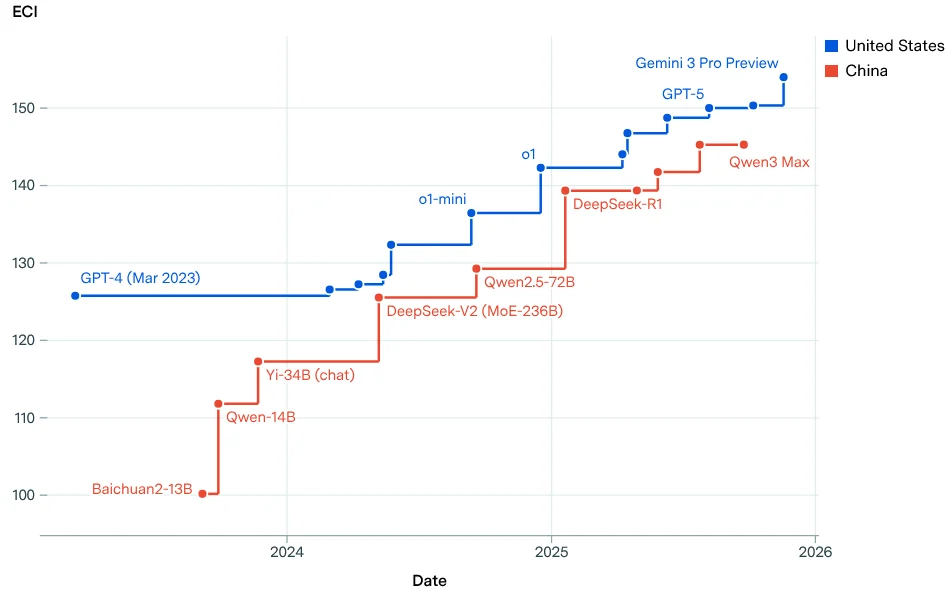
The first week of July 2026 marked a pivotal moment. SpaceXAI released Grok 4.5, OpenAI began rolling out GPT-5.6 (in Sol, Terra, and Luna variants), and Meta launched Muse Spark 1.1. The defining characteristic of these new releases is not just an increase in capabilities, but primarily aggressive affordability. For example, OpenAI's smallest new model, Luna, costs just $1 per million input tokens and $6 per million output tokens. In comparison, flagship models from older generations, like Anthropic's Opus 4.8, cost up to $25 per million output tokens, while the premium GPT-5.6 Sol variant is around $30.
This price compression, where the cost of running frontier intelligence is dropping by an order of magnitude, has immense implications for business budgets. Suddenly, there's expanded scope for massive experimentation and AI deployment in areas where it was previously not economically viable. Furthermore, Meta abandoned its open-weight model strategy, with Muse Spark 1.1 being its first paid closed model, signaling an industry-wide shift towards monetizing the inference layer of AI agents.
From Experiments to Mass Automation: The Era of AI Agents
The reduction in inference costs is accelerating the adoption of autonomous AI agents. These intelligent software systems are designed to perform tasks autonomously by analyzing data, understanding objectives, and taking actions to achieve specific outcomes. Unlike traditional automation tools that rely on predefined rules, AI agents continuously learn and adapt based on data and interactions.
Businesses in 2026 are increasingly leveraging AI agents to improve efficiency, reduce operational costs, and scale faster. We see this across operations, sales, customer service, and marketing. While 88% of organizations use AI in at least one function, only 7% have truly scaled it across the entire company. This gap highlights the enormous potential that cheaper models unlock. Tools like our one-AI-agent project help businesses identify automation opportunities and build secure AI systems that minimize manual work and accelerate processes.
Google and AI Content: Quality and Transparency Above All
Coinciding with the AI model price war, Google rolled out another significant core search update in July 2026. This update replaced AI-detection signals with three new scoring dimensions: editorial process attribution, strategic intent, and information gain. The focus is no longer on whether AI wrote your content, but whether a credible editorial process produced it.
AI-assisted content with human editorial review gained an average of 8.3 ranking positions, while programmatically generated content with minimal review dropped 18.3 positions. This indicates that teams using AI to scale content production while maintaining rigorous editorial processes, proper attribution, and sourced data now have a structural advantage. Emphasis is placed on whether the content serves the user's actual question, provides original data, primary sources, or a unique perspective.
For marketers, Generative Engine Optimization (GEO) is no longer optional homework. Organic click-through rates on queries with AI Overviews have reportedly dropped by more than half. The goal is no longer just a search ranking, but to be the source that AI actually cites. This requires content that is clear, factually accurate, and easily extractable by AI models.
Regulation for Trust: The EU AI Act in Practice
Another critical factor is the EU AI Act entering its full enforcement phase. As of July 10, 2026, transparency obligations for chatbots and conversational AI systems became live and enforceable. This means that if your business deploys an AI chatbot or virtual assistant interacting with EU users, you are legally required to clearly disclose that the user is interacting with an AI.
The full applicability of most EU AI Act provisions, including those for the transparency of AI-generated content, is set for August 2, 2026. This includes the obligation to mark AI-generated or altered content with machine-readable labels to reduce the risk of misinformation and manipulation. For businesses, this presents a clear challenge to ensure regulatory compliance and build user trust.
What This Means for Your Business: Practical Recommendations
- Optimize AI Costs: Leverage the new, affordable AI models to expand automation and efficiency. Re-evaluate your existing AI implementations and seek cost savings.
- Invest in AI Agents Wisely: With decreasing costs, there's more scope for broader deployment of AI agents across business processes. Focus on clear use cases and always ensure human oversight and control mechanisms.
- Rethink Your Content Strategy for the GEO Era: Content must be authoritative, backed by a clear editorial process, and provide genuine informational value. Optimize it to be easily citable by AI overviews and assistants.
- Ensure EU AI Act Compliance: Implement mandatory transparency for AI chatbots and labeling of AI-generated content. This is not just a legal obligation but also a foundation for building user trust.
The future of artificial intelligence is more accessible, and its potential for business transformation is immense. However, to maximize its benefits, we must approach it strategically, with an emphasis on quality, trust, and ethics. Those who embrace these changes and adapt quickly will gain a significant competitive advantage.
FAQ
What is the main news in the AI model market in July 2026?
The main news is a price war among leading AI model providers like OpenAI (GPT-5.6), Meta (Muse Spark 1.1), and SpaceXAI (Grok 4.5), which has driven inference costs to historic lows, making advanced AI more accessible to a wider range of businesses.
How does Google evaluate AI-generated content after the July 2026 update?
In July 2026, Google updated its algorithm to focus on three new signals instead of AI detection: editorial process attribution, strategic intent, and information gain. Human oversight, originality, and content value are now key.
What does Generative Engine Optimization (GEO) mean?
Generative Engine Optimization (GEO) is the practice of optimizing content so that it can be easily cited and used in AI-generated answers by search engines (e.g., Google AI Overviews) and AI assistants. The goal is to be the source that AI directly quotes, rather than just getting a click.
When did the EU AI Act transparency rules for AI systems come into effect?
The EU AI Act transparency rules for chatbots and interactive AI systems became enforceable on July 10, 2026. The full applicability of most provisions, including the labeling of AI-generated content, is set for August 2, 2026.
Sources & references (6)
- https://vertexaisearch.cloud.google.com/grounding-api-redirect/AUZIYQE2UkkfBnKrxGiT_ZA3t0zId3dJJ_1YkXZBc7xChtoDra2-VUp1i-ogm6-oXF49pLmqLByhnfxIlIy4tAuP1Kuie9l8-6JunmsYDApT8XphT_9cUpLVUy55byf2GI5ZAFqYJzzO0o0sVDc=
- https://vertexaisearch.cloud.google.com/grounding-api-redirect/AUZIYQG3tQpvsaOIA8UczT5JEGQaloYM-DuzomKcSKz3D4vzdBnxHCQtF3pMPFE8XaO0lpo8pCaL_LHr5fGRo1FnjoRI7BUsJccci-9mDN8tZYwUIP4JZvueLu_TmVCz5yunCwmnPfjh_fzz5fXvnU93dZzi5h2u
- https://vertexaisearch.cloud.google.com/grounding-api-redirect/AUZIYQFMKdtj_vC359f9iDHTHL0JdyO0LL9tnroFAJ8zaEJdMFOLSXcSKviSP3gDiU7gSPbC7JK6nFosDQHaIdCi7v3O1FrZbaiH6qR7dYv9izCZgmniYsRk4vTxk_FMOktHxXlBntD1puUphQ6qxCik_hBR0L-_V4zJf0MB-H9Mk_xLCqCHXPvX
- https://vertexaisearch.cloud.google.com/grounding-api-redirect/AUZIYQEv9F0njKt8G2zNBDu099OY6yVDfsCMQyIT66eieTenUSnbCMXBYqOyf9PCSRgkDk3QTodTtVkM69EfLnL_FxdrhCkllqpwF2U4D68L_EgVR5PkfIDtTYKtUG3NrSPR7N1wLg7TAQcRlEmCfWu5wxlAFlOBHfNuC1RKJ5UDGTT98A=
- https://vertexaisearch.cloud.google.com/grounding-api-redirect/AUZIYQF-Y-Jz91346QYf6IY0zSJCHKwsJXwFaQc8gPao2eKROKt7SyLqQXAm4mmJYeZvT0SgYMzFlepo42UBmLAIja5Vuse1oekpsJzXoNCY-wtJ4XVdws9XE3Qr74oTbmFlSkQ0edyMbby4iCzV4xs1bz3avGijiRlRNgV362eKamsQ-PJYVAQPWnLh35OIN3jgekEN2VudQvujEhAVQNxgfWz2UXqkxZXuErsqjQxXGLuLO20s6J2s3Tul0ZsT6myTKzrXhOFd4WmvctvJztHDwpleMd5P6kiV0X6Ik-JFEwwnFBenOhWAtO4jEZoB8UBJcRZs9x-Ka-L34xH96wXy_VaB7NRySe9i
- https://vertexaisearch.cloud.google.com/grounding-api-redirect/AUZIYQHyIefP4CRJFINMYAMKBeZ62jNy38YqZ35lBx1Le_RU9pS6jFA8z3OFAA5Ov_YtV6fnMeUPNo0IxLYvUQQElc7RM7ECC4gCl967V78FxwauZSGEjNFCS-hn43eL3xvQhEaItvCR66umsplpj184fVnsyNKp5o3akTdxCw==
You might also like
 AI & MarketingAI and the Human Factor in Marketing: Who's in Charge and What Skills We Need in 2026In 2026, AI skills are the most sought-after globally. Discover how marketer roles are changing, what key skills you need, and how to stay ahead in the AI era.Čvc 31, 2026
 AI & MarketingThe EU AI Act's Two-Clock Problem: What Applies from August 2, 2026Navigate the EU AI Act's staggered deadlines. Understand what applies from August 2, 2026, and how to avoid penalties for GPAI and transparency obligations.Čvc 30, 2026
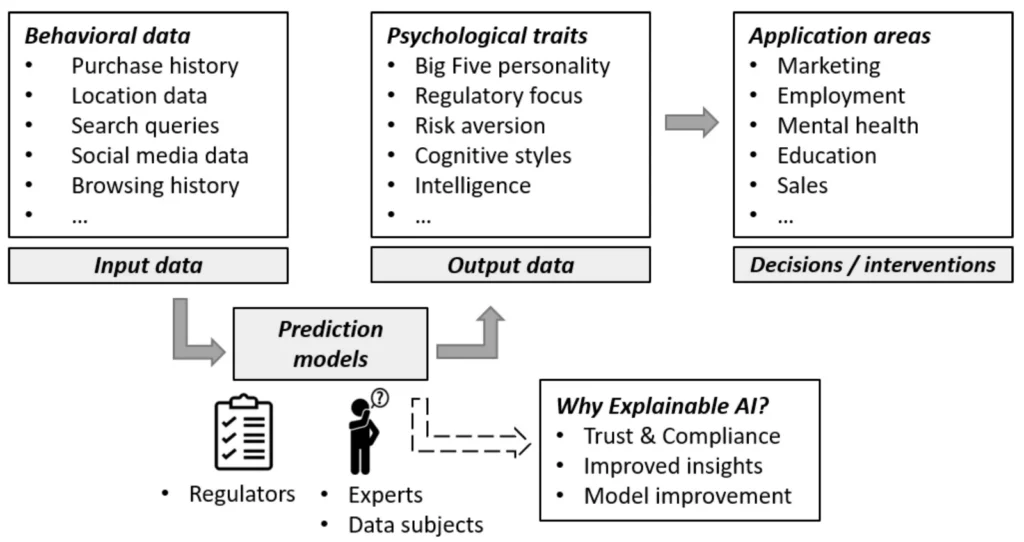 AI & MarketingPredictive AI in Marketing: Goldmine or Ethical Minefield?Predictive AI is revolutionizing marketing personalization. Discover how to maximize ROI in dynamic creative and micro-segmentation while navigating ethical boundaries and regulations.Čvc 29, 2026
Where is your marketing burning money?
AI audit and implementation for business owners. From diagnosis to deployment.
Get an audit