AI Personalization in Marketing: Balancing Effectiveness with Privacy Protection
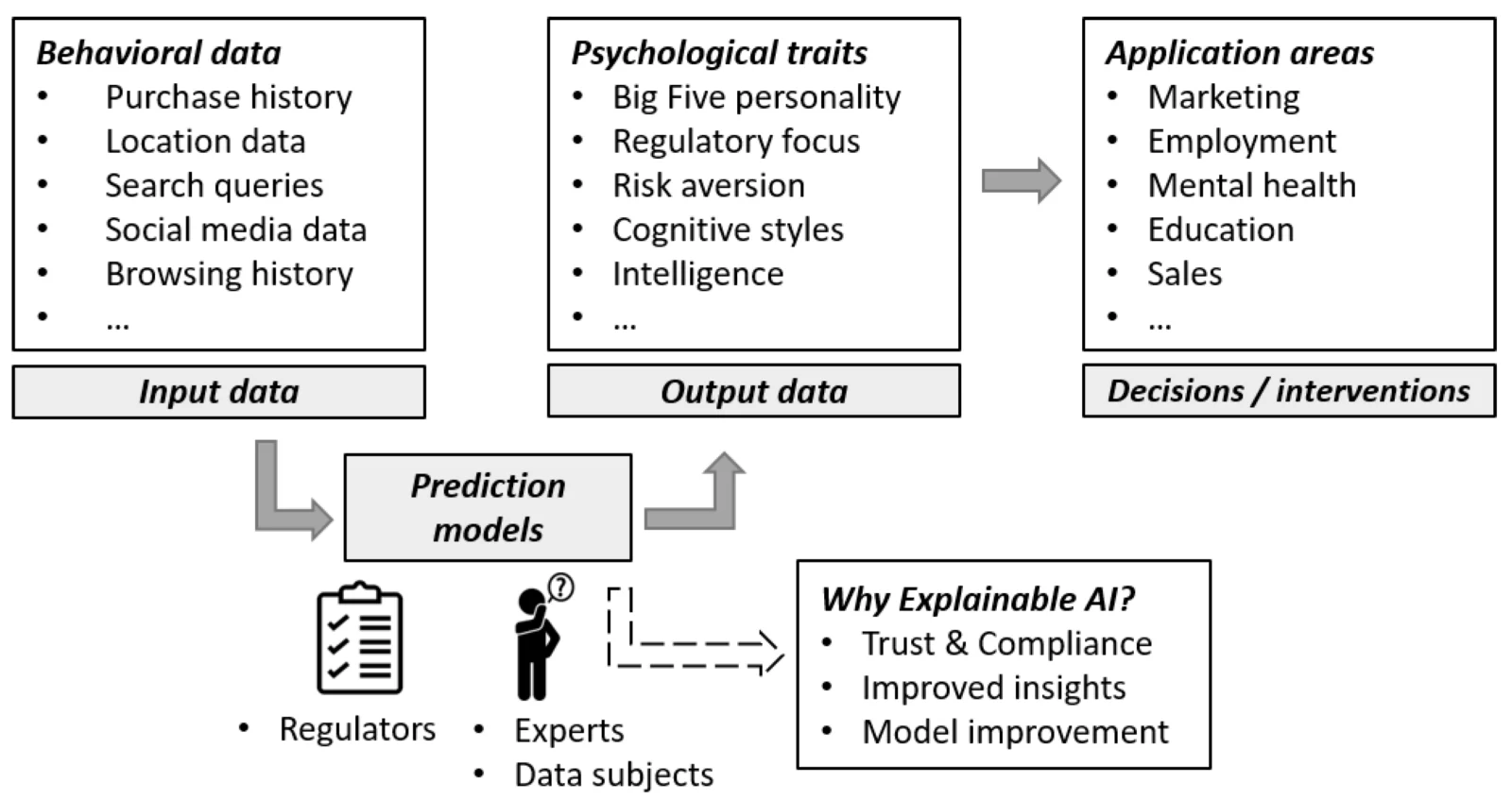
Photo: Yanou Ramon, R.A. Farrokhnia, Sandra C. Matz & David Martens · CC BY 4.0 · source
AI personalization empowers marketing teams to deliver highly relevant content and offers, significantly boosting campaign effectiveness. However, it simultaneously raises substantial concerns about privacy and the ethical handling of personal data. This dynamic compels businesses to reassess their strategies and explore new avenues to maximize AI's benefits while maintaining customer trust.
The Era of Hyper-Personalization and Its Challenges
Generative artificial intelligence has propelled the capabilities of personalization to an entirely new level. Previously, marketers relied on audience segmentation and static templates. Today, AI can analyze vast amounts of data in real-time – from purchase and browsing history to social media behavior and geographical location – to generate unique messages, offers, and even visual content for each individual user. The outcome is a dramatically improved customer experience, higher conversion rates, and stronger loyalty.
Yet, this unprecedented capability also introduces a myriad of challenges. One of the most significant is the concern over privacy infringement. When AI "knows" too much about a user, the line between helpful relevance and "creepy" intrusion blurs. Complaints about ads following users across platforms are on the rise, and regulators worldwide, including the European Union with its GDPR and California with CCPA, are tightening rules for the collection and processing of personal data. Companies failing to respect these limits face not only hefty fines but, more critically, a loss of trust that is painstakingly built and instantly shattered.
The Key to Trust: Ethical Principles and Transparency

For the successful deployment of AI personalization, prioritizing ethical principles and transparency is paramount. This means clearly communicating to users what data is being collected, why, and how it will be used. Users should have easy control over their data, the ability to withdraw consent, or customize their level of personalization. Establishing robust ethical guidelines for AI, which define boundaries and responsibilities, is becoming an indispensable part of any marketing strategy.
Trust is the new currency in digital marketing. Companies that can transparently and ethically leverage AI for personalization will gain a competitive edge. It's not merely about regulatory compliance, but about building long-term customer relationships with customers who appreciate respect for their privacy.
Privacy-Enhancing Technologies (PETs): The New Frontier in Data Protection
One of the most promising solutions helping to balance personalization and privacy are Privacy-Enhancing Technologies (PETs). These technologies enable companies to extract valuable insights from data and offer personalized services without directly exposing sensitive personal information.
Among the most recognized PETs are:
- Federated Learning: Instead of centralizing all data on a single server, AI models are trained locally on users' devices. Only model updates (not raw data) are then sent back for aggregation.
- Differential Privacy: "Noise" is intentionally added to data, making it impossible to identify individuals while preserving overall statistical trends.
- Homomorphic Encryption: This allows computations to be performed on encrypted data without the need to decrypt it. Data thus remains unreadable even during analysis.
These technologies represent a fundamental shift. They facilitate effective marketing analytics and targeting, for instance, in remarketing or campaign optimization, all with significantly reduced privacy risks. For projects like our one-AI-agent, the ethical deployment of AI using such technologies is a crucial pillar, ensuring not only performance but also responsibility.
Integrating Ethical AI Personalization into Your Strategy
Transitioning to ethical and privacy-friendly AI personalization requires a thoughtful approach. Here are several steps companies can take:
- Data Audit and Transparency: Thoroughly map what data you collect, where it's stored, and how it's used. Ensure your privacy policies are clear, concise, and easily accessible.
- Invest in PETs: Consider implementing technologies like federated learning or differential privacy. While the initial investment might be higher, it pays off in the long run through increased trust and compliance.
- Privacy-by-Design: Integrate privacy protection into all phases of product development and marketing campaigns, rather than treating it as an afterthought.
- Team Education: Train your marketing and data specialists on the ethical aspects of AI and the use of new technologies. In our work with clients, we frequently observe that understanding these principles is as vital as technical expertise.
- Focus on Value Exchange: Instead of merely collecting data, concentrate on the value personalization brings to the user. Create a clear value exchange – users share data because they receive a more relevant and useful experience in return.
AI personalization is a powerful tool that can dramatically enhance marketing outcomes. However, its true potential will only be fully realized when the right balance is struck between effectiveness and respect for user privacy. Companies that embrace this challenge with foresight and responsibility will gain not only loyal customers but also a sustainable competitive advantage in the digital world.
FAQ
- Q: What is AI personalization in marketing?
- A: AI personalization is the process of using artificial intelligence to deliver highly relevant and tailored content, offers, and experiences to individual users based on the analysis of their behavior and data.
- Q: What are the main ethical concerns of AI personalization?
- A: Key concerns include privacy infringement, lack of transparency in data collection and use, potential discrimination, and the feeling of being "tracked," which can lead to a loss of trust.
- Q: What are Privacy-Enhancing Technologies (PETs)?
- A: PETs are technologies that allow data processing and analysis to gain insights and enable personalization without directly exposing sensitive personal information, for example, through federated learning or homomorphic encryption.
- Q: How can companies start with ethical AI personalization?
- A: Companies should begin with a data audit, invest in PETs, implement "privacy-by-design" principles, educate their teams, and focus on a clear value exchange with users.
FAQ
What is AI personalization in marketing?
AI personalization is the process of using artificial intelligence to deliver highly relevant and tailored content, offers, and experiences to individual users based on the analysis of their behavior and data.
What are the main ethical concerns of AI personalization?
Key concerns include privacy infringement, lack of transparency in data collection and use, potential discrimination, and the feeling of being "tracked," which can lead to a loss of trust.
What are Privacy-Enhancing Technologies (PETs)?
PETs are technologies that allow data processing and analysis to gain insights and enable personalization without directly exposing sensitive personal information, for example, through federated learning or homomorphic encryption.
How can companies start with ethical AI personalization?
Companies should begin with a data audit, invest in PETs, implement "privacy-by-design" principles, educate their teams, and focus on a clear value exchange with users.
Sources & references (6)
- https://www.gartner.com/en/articles/top-trends-in-ai-in-marketing-personalization-and-privacy
- https://www.forbes.com/sites/forbestechcouncil/2023/10/26/the-rise-of-hyper-personalization-benefits-and-ethical-dilemmas/
- https://commission.europa.eu/law/data-protection/data-protection-eu_en
- https://www.pwc.com/gx/en/issues/data-privacy-cybersecurity/ai-ethics-trust.html
- https://techcrunch.com/2024/03/15/privacy-enhancing-technologies-the-future-of-data-driven-marketing/
- https://www.ibm.com/blogs/research/2023/11/federated-learning-business-applications/
You might also like
 AI & MarketingAI and the Human Factor in Marketing: Who's in Charge and What Skills We Need in 2026In 2026, AI skills are the most sought-after globally. Discover how marketer roles are changing, what key skills you need, and how to stay ahead in the AI era.Čvc 31, 2026
 AI & MarketingThe EU AI Act's Two-Clock Problem: What Applies from August 2, 2026Navigate the EU AI Act's staggered deadlines. Understand what applies from August 2, 2026, and how to avoid penalties for GPAI and transparency obligations.Čvc 30, 2026
 AI & MarketingPredictive AI in Marketing: Goldmine or Ethical Minefield?Predictive AI is revolutionizing marketing personalization. Discover how to maximize ROI in dynamic creative and micro-segmentation while navigating ethical boundaries and regulations.Čvc 29, 2026
Where is your marketing burning money?
AI audit and implementation for business owners. From diagnosis to deployment.
Get an audit