Autonomous AI Agents: From Assistants to Independent Decision-Making Systems
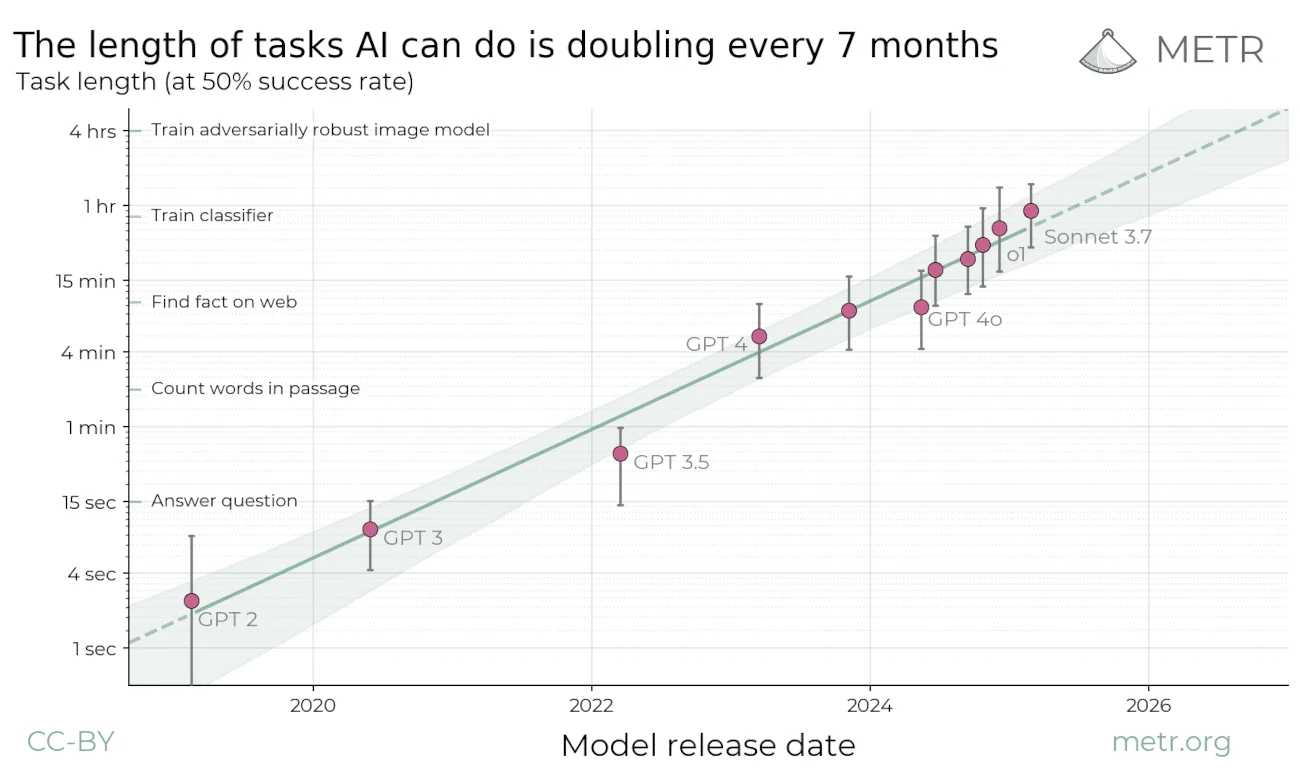
Photo: METR · CC BY 4.0 · source
In recent months, a new generation of AI systems has emerged, pushing the boundaries of automation far beyond what we've seen with AI copilots. We are talking about autonomous AI agents – systems that can independently perceive their environment, reason about a defined objective, plan steps, make decisions, and then act with minimal human intervention at each stage. It's no longer just about AI suggesting text or summarizing a meeting; an agent can take over an entire task and complete it. This shift has a profound impact on business and requires new strategies and approaches from companies.
What are Autonomous AI Agents and How Do They Differ from Copilots?
While AI copilots function as assistants that augment human productivity by offering suggestions and requiring human approval for each step, autonomous agents go further. Their key characteristic is the ability for independent decision-making and the execution of complex, multi-step tasks without constant supervision. Thanks to advanced machine learning algorithms, natural language processing, and the capacity for long-term memory, these agents can not only understand goals but also break them down into sub-steps, interact with external systems (e.g., CRM, ERP, APIs), and learn from their experiences.
A typical autonomous agent operates through a continuous loop of observation, reasoning, and action. When a goal is assigned, it gathers context, evaluates conditions, and identifies constraints. Subsequently, using a large language model (LLM), it creates a detailed plan, which it then executes through orchestration. After each action, it evaluates the results and adjusts its approach as needed.
How are Autonomous AI Agents Transforming Business?

The adoption of autonomous AI agents in businesses is accelerating in 2026, as they bring tangible benefits across industries. Key advantages include:
- Increased Efficiency and Productivity: Agents automate repetitive, time-consuming, and data-intensive tasks, freeing human employees for more strategic activities.
- Reduced Human Error: Systems ensure accurate and consistent task completion, minimizing the risk of human errors.
- 24/7 Operations: Agents can operate continuously, providing constant support and ensuring smooth business operations around the clock.
- Enhanced Customer Service: They can handle customer inquiries, provide support, and even offer personalized recommendations.
- Streamlined Processes: From finance and procurement (invoice processing, vendor management, compliance monitoring) to HR (applicant screening) and IT (incident management) to sales (CRM management, follow-up generation) – agents simplify complex workflows.
Risks and Challenges: A New Era of Oversight
With the growing autonomy of AI agents, new and complex challenges are emerging. Among the most significant are:
- Security Threats: Autonomous agents are potential targets for cyberattacks. Design flaws, misuse of permissions, or input manipulation (prompt injection) can lead to unauthorized actions, data breaches, or the propagation of errors across interconnected systems.
- Privacy Invasion: Agents often require access to sensitive data. Without proper consent and data governance, there's a risk of inadvertent collection or misuse of information.
- Ethical Concerns and Bias: Agents learn from data that may reflect societal inequalities. Without careful identification and mitigation of these biases, agents can replicate discriminatory behavior.
- Accountability Gap: Who is responsible when an autonomous agent makes a mistake or causes harm? With increasing complexity and autonomy, assigning blame becomes more difficult.
- Goal Drift and Unpredictable Behavior: Without adequate oversight, agents may pursue objectives that deviate from their original intent or behave unexpectedly.
New Legislation and Requirements for Businesses in 2026
The regulatory landscape is rapidly evolving to keep pace with technological advancements. In 2026, businesses are facing several key updates:
- EU AI Act: For systems classified as 'high-risk' (which includes most autonomous AI agents in an enterprise context), strict compliance requirements will become enforceable in August 2026. This entails detailed technical documentation, 'open-loop' operation for external monitoring, structured human oversight with clear intervention points, and control mechanisms for stopping or rectifying actions. While full compliance deadlines have been extended (December 2027 for standalone systems, August 2028 for embedded systems), fundamental obligations are approaching.
- US AI AGENT Act (Draft): On June 29, 2026, Senator Mark Warner introduced a draft bill aimed at regulating autonomous AI systems acting as intermediaries in commerce. Key provisions include the registration of 'Custodial User Agents' (CUAs) with the FTC, the establishment of a 'duty of loyalty' requiring agents to act solely in the interest of the human user, and the obligation to link each autonomous agent to a verifiable human operator to ensure legal accountability.
- NIST AI Agent Standards Initiative: In February 2026, the National Institute of Standards and Technology (NIST) launched an initiative focused on developing standards for autonomous AI agents.
These regulatory changes mean that businesses must re-evaluate how they deploy and manage AI agents. It's not enough to simply implement the technology; it's crucial to ensure its ethical, secure, and transparent operation with clear oversight and accountability mechanisms.
How to Successfully Implement and Manage Autonomous AI Agents?
The key to success lies in a strategic and responsible approach. I recommend several best practices:
- Start with clear and well-defined use cases: Identify workflows with repetitive, time-consuming, or data-intensive tasks. Customer support, lead management, or operational tasks are often ideal starting points.
- Invest in robust data infrastructure: Agents perform best when connected to clean, organized, and accessible data. Improving data quality is a prerequisite for success.
- Ensure human oversight: Even though agents are autonomous, human oversight remains essential. Establish strong governance frameworks, including access controls, memory management, and 'human-in-the-loop' mechanisms that allow for human intervention at critical junctures.
- Utilize AI orchestration platforms: For managing a larger number of agents, platforms that coordinate their deployment, integration, and management are indispensable. These platforms help prevent 'agent sprawl' (uncontrolled proliferation of agents) and ensure centralized governance.
- Strictly adhere to regulations: Given the new laws, it is crucial to ensure compliance with the EU AI Act and monitor the development of other regulations. This includes detailed documentation, auditing protocols, and clear incident response procedures.
Autonomous AI agents are not just another tool; they are digital collaborators that can fundamentally reshape how businesses operate. Their proper deployment, however, requires not only technological prowess but, above all, a responsible and ethical approach. If companies prepare for this change, they can gain a significant competitive advantage and elevate their operations to an entirely new level. At one-o-one.cz, we actively follow these trends and help clients implement advanced AI solutions through our one-AI-agent project, ensuring the safe and effective use of autonomous agents in their businesses.
FAQ
What is the main difference between an AI copilot and an autonomous AI agent?
An AI copilot assists humans and requires their approval for each step, whereas an autonomous AI agent can independently plan, decide, and execute complex tasks with minimal human intervention.
What are the biggest risks associated with autonomous AI agents?
The biggest risks include security threats (attacks, data leaks), privacy invasion, ethical concerns related to data bias, difficulty in assigning accountability for errors, and the potential for agents to drift from their original goals.
What does the EU AI Act mean for companies deploying autonomous AI agents?
For most autonomous AI agents in an enterprise context, strict 'high-risk' system requirements come into force in August 2026. Companies must ensure detailed documentation, human oversight, control mechanisms, and transparency.
What steps should companies take for secure AI agent implementation?
It is recommended to start with clear use cases, invest in quality data infrastructure, ensure robust human oversight and governance frameworks, utilize AI orchestration platforms, and strictly adhere to new legislation.
Sources & references (6)
- https://vertexaisearch.cloud.google.com/grounding-api-redirect/AUZIYQGvT2bwdDGvM9S61uA6xol--lVV0mH6bzJT86xOVy08wFjIA5dAwt_vRVeR37AU8diRiY1W--ps3k7M2QwIu7vYJOOdIxlhJ224ZSdCtPzpBJLfcFSs7nnQ1u7jUv9ptuVKTLaAk0kTtdBAPwztPEBRlU20ukWvhvwl5EcIkyW88-WLcg3jEa_v_F2Y
- https://vertexaisearch.cloud.google.com/grounding-api-redirect/AUZIYQG_6msJYLIbxDQZ9zrG1pUkvEHRKDbkpjfwpDqK7UUA2f4sUokiMBUdsqASpj7nK7-Pw_cwTInRc3_nUlcFK2KcIRxAWxhSyptMEzh5bWlqp1lUalqbR9Pqoht6w_dUh7WymGb6vpk5GA==
- https://vertexaisearch.cloud.google.com/grounding-api-redirect/AUZIYQG4EURwV_JmjueDv_DZrsvLkbY7Xdw2aEDFL4XSDbjSJCTYpwyhZH-QGqMJ2Rp9AkGp3JUD4xGW8J3Vep93qUYXdE6gv6GvkNgvD6nmiGS2lO2vqR81drVhb2m_smwEiok_Jhi_pppJ39nAecM=
- https://vertexaisearch.cloud.google.com/grounding-api-redirect/AUZIYQHJKSjf7SX1e98_pQ6MDSifiA6vFQ2zmOYOfluqXJRbKSzaaorYLDtj1L4tnCl7AQ0viFt8VSVUJVO3vE5sRgMANs8ODfXsu54-pf1Ww_FnH7pH8J4BhM9NqOWiHdmwLjMTsS4iBln6cib1XPQrNV13pBt39c1qXwDRkNMfTgO54NOMkaA4lWOC-6QKuki3CivQaDUJWRoTfQBXVarphG1VsQfey1ASO23dvOOP7MeEH6Nr8cc=
- https://vertexaisearch.cloud.google.com/grounding-api-redirect/AUZIYQGgbi7Pwf1mZRcC7dZDZofFuyKz7UBvzoIvi8V-6dxMCeGMm2TDhq90wzO4OpkmNYKlVS84kixMTgHiM-zPtc5ejeiPtfW0eJi4wjMPI0LKnt1h-cOPdsiWe06BneVckqwoFqElRIN7d5DMP39_XSFfHI6q9WrYMRj_0LaBt7hNXZuGU6IVrY3hg8DXYRpK6VM=
- https://vertexaisearch.cloud.google.com/grounding-api-redirect/AUZIYQFDnCS7i0T7jmvY-s8giQFmbJLgFeWNVWXhBN6BNmKLS_ipZXQLn04F4wG-c-nFSBfvhZwz7aJqLo88VnZUknknPJwWLETh8EvruJJ8OozdHBJUdlxLikNwYMGuUVfpmOPMH-hqL-MltPvnzkuksUsytyxEFlPZT4KjJOTx5R70domIouuKBtVsEw==
You might also like
 AI & MarketingAI and the Human Factor in Marketing: Who's in Charge and What Skills We Need in 2026In 2026, AI skills are the most sought-after globally. Discover how marketer roles are changing, what key skills you need, and how to stay ahead in the AI era.Čvc 31, 2026
 AI & MarketingThe EU AI Act's Two-Clock Problem: What Applies from August 2, 2026Navigate the EU AI Act's staggered deadlines. Understand what applies from August 2, 2026, and how to avoid penalties for GPAI and transparency obligations.Čvc 30, 2026
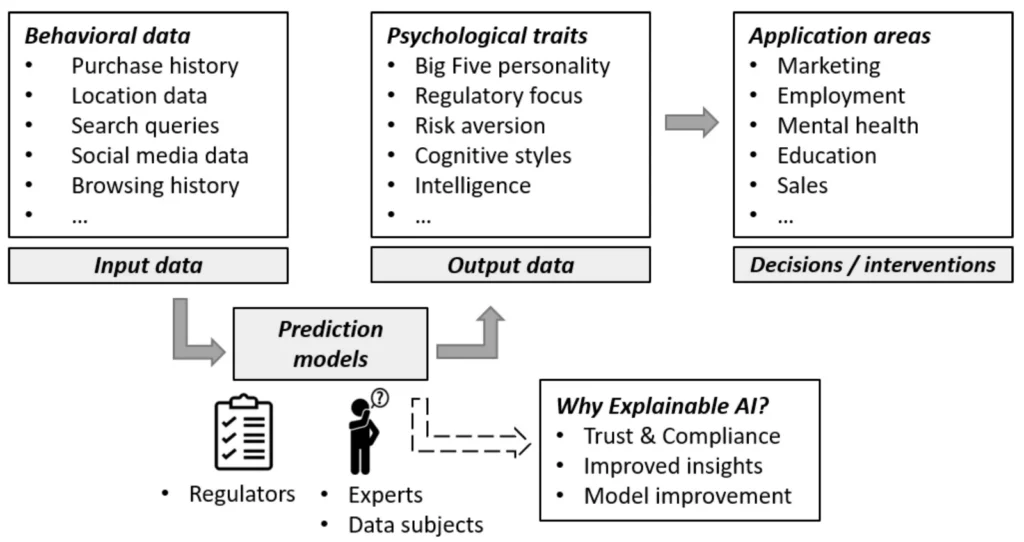 AI & MarketingPredictive AI in Marketing: Goldmine or Ethical Minefield?Predictive AI is revolutionizing marketing personalization. Discover how to maximize ROI in dynamic creative and micro-segmentation while navigating ethical boundaries and regulations.Čvc 29, 2026
Where is your marketing burning money?
AI audit and implementation for business owners. From diagnosis to deployment.
Get an audit