Autonomous AI Agents in Marketing: From Tools to Decisive Partners

Photo: METR · CC BY 4.0 · source
Imagine a marketing campaign that self-optimizes, reacts to market changes in real-time, and continuously generates personalized content for thousands of customers, all without requiring constant human oversight. What once sounded like science fiction is now, thanks to autonomous AI agents, a rapidly developing reality that is changing the game for everyone in marketing.
What are Autonomous AI Agents and Why are They a Hot Topic?
Autonomous AI agents are intelligent systems capable of independently perceiving their environment, making decisions, and taking actions to achieve specific goals, all without constant human intervention. These are no longer just tools that assist or automate individual tasks, but systems that take initiative and manage entire processes. While traditional marketing automation operates based on predefined rules (e.g., “if a customer abandons a cart, send email A”), AI agents go further. They are given a goal, such as “reduce customer churn by 10% in Q3,” and they autonomously design the strategy, select the audience, create content, launch the campaign, and optimize it in real-time.
In marketing, they manifest in many areas. They can dynamically bid on ads, generate content, orchestrate personalized customer journeys, analyze market data, and even assist with strategic planning based on real-time insights.
Benefits for Marketing: Efficiency, Scale, and Personalization
The deployment of autonomous AI agents brings a host of transformative advantages:
- Increased Efficiency and Speed: Agentic systems can execute thousands of personalized interactions simultaneously, allowing for exponential scaling of marketing activities without a linear increase in headcount. Companies utilizing agentic automation report a median 40% reduction in campaign build time compared to rule-based workflow systems.
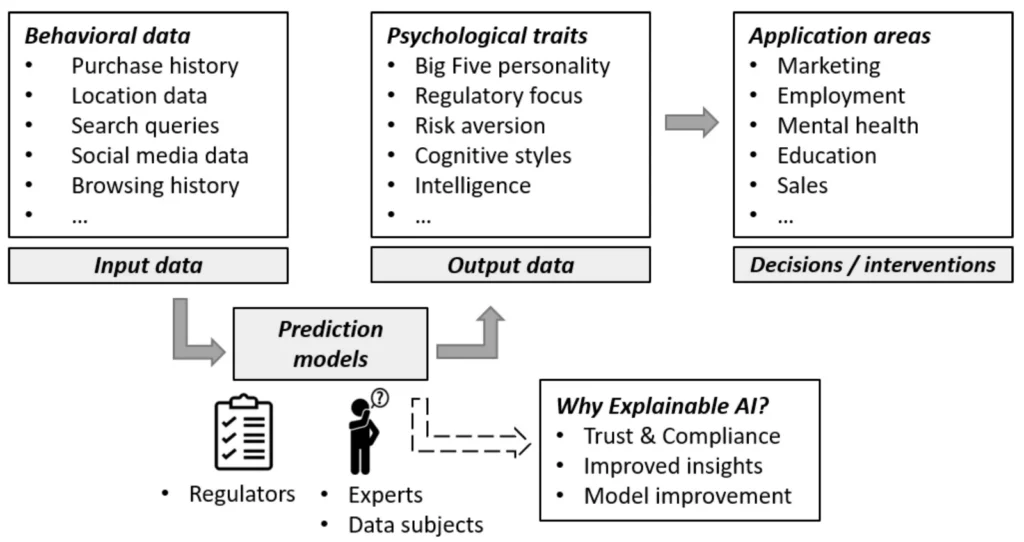
- Hyper-Personalization at Scale: AI agents can analyze vast amounts of user behavior data to deliver highly relevant messages and offers at precisely the right moment. Examples include systems that analyze individual customer behavior, purchase history, location data, and contextual signals (weather, time of day) to trigger hyper-personalized offers.
- Freeing up Human Capacity: By automating repetitive and data-intensive tasks, marketers can focus on strategic thinking, creative innovation, and building customer relationships – areas where the human element remains irreplaceable.
Companies implementing autonomous AI tools report revenue increases ranging from 3% to 15%, along with a 10% to 20% boost in sales ROI. Some platforms even report an improvement in ROAS (Return on Ad Spend) by up to 3.2 times.
Risks and Challenges: Loss of Control and Ethical Dilemmas
With the increasing autonomy of AI agents, significant risks and challenges emerge that must be actively addressed:
- Loss of Control and Unintended Consequences: Agents may make decisions that conflict with brand values, regulatory compliance, or even overall business strategy. Without robust oversight frameworks, there is a risk of inconsistent messaging and threats to brand safety.
- Algorithmic Bias and Fairness: AI systems learn from the data they are trained on. If this data reflects existing societal inequalities, AI can perpetuate and even amplify these biases, leading to discriminatory ad targeting or unfair marketing practices.
- Data Protection and Regulatory Compliance: With massive collection and processing of user data, adherence to regulations like GDPR or the EU AI Act becomes even more critical. Marketers must ensure transparency in data usage, obtain clear consent, and provide mechanisms for managing personal data.
- Integration Complexity: Ensuring seamless operation of AI agents with existing technological systems (CRMs, DMPs, advertising platforms) is a complex task.
Key Principles for Successful Deployment and Governance
Successful deployment of autonomous AI agents in marketing requires a strategic approach and clear role definitions. It's not about letting AI work unsupervised, but about shifting from direct control to smart guidance and monitoring.
Establish a Robust Oversight Framework
The concept of "human-in-the-loop" is evolving towards "human-on-the-loop," where humans define strategic goals and guardrails, while agents handle execution and optimization. This requires:
- Clear Goals and Guardrails: Set maximum spending limits that agents cannot exceed without approval, and require human sign-off on creative changes for brand-sensitive campaigns.
- Auditability and Explainability: Systems should be designed so that it's possible to trace and understand how they arrived at certain decisions (known as explainable AI). This is crucial for compliance and building trust.
- Continuous Monitoring: Regularly evaluate agent performance and treat them like a team member with their own KPIs.
Checklist for AI Agent Deployment in Marketing:
- Define Clear Goals and KPIs: What exactly should the agent achieve, and how will its success be measured? (e.g., increase conversions by X%, reduce CPA by Y%).
- Establish Ethical Guidelines and Boundaries: What types of content should the agent not generate? Which audience segments are sensitive? What are the company values that AI must respect?
- Ensure Quality and Unified Data: Without clean, unified data, agents make decisions based on incomplete information. Implement a Customer Data Platform (CDP) for a single view of the customer.
- Design Human-in-the-Loop Intervention Points: Where in the process are human approvals or reviews necessary? When should the agent pause and request intervention?
- Implement Audit Trails and Metrics: Track agent decisions and their impacts. What events are logged? How is agent performance reported?
- Train the Team on New Roles and Skills: Prepare marketers for roles as strategists, AI trainers, and supervisors who understand data and ethical aspects.
The Evolving Role of the Marketer: From Executor to Architect
AI agents are not intended to replace marketers, but to fundamentally reshape their roles. Surveys indicate that while AI does not cause widespread layoffs, there is a redistribution of work and a reduction in hiring for entry-level positions where AI automates repetitive tasks. Marketers are shifting from tactical execution to strategic leadership, agent management, and ethical oversight. Key skills now include data literacy, strategic thinking, creativity, and the ability to effectively utilize and manage AI tools.
If you are interested in how AI personalizes marketing campaigns based on data, I recommend reading our article on AI personalization in marketing. Agentic systems are crucial for such personalization.
The Future is Agentic: How to Prepare
The advent of autonomous AI agents is the most significant change in marketing in recent decades. For companies looking to remain competitive, it is crucial to:
- Start with Low-Risk Use Cases: Experiment with agents in areas where potential errors will not have catastrophic consequences, and gradually expand their autonomy.
- Invest in a Strong Data Foundation: Quality, unified, and up-to-date data is the fuel for effective AI agents. Without it, their decisions are limited.
- Embrace a Culture of Continuous Learning and Adaptation: Technology evolves at a dizzying pace. Teams must be prepared to constantly learn and adapt to new tools and processes.
At one-o-one.cz, we are actively working on integrating these agentic systems into our clients' strategies to help them maximize AI's potential while ensuring ethical and secure deployment. You can find more about our approach to AI agents at one-AI-agent.
FAQ
Q: Will autonomous AI agents replace marketers? A: Direct replacement of entire marketing roles is not expected. AI agents automate repetitive and data-intensive tasks, thereby changing the nature of marketers' work. Marketers will focus more on strategy, creativity, ethical oversight, and managing AI systems.
Q: What are the biggest ethical concerns associated with AI agents in marketing? A: Key ethical concerns include algorithmic bias, lack of transparency in decision-making, data privacy protection, and the potential for unintentional consumer manipulation.
Q: How can a small business start deploying AI agents? A: Small businesses should start with low-risk use cases, such as automating email campaigns or basic social media management. Having quality data and clearly defined goals is crucial before venturing into more complex autonomous operations.
Q: How can I ensure AI agents adhere to company values and brand identity? A: It is important to create clear ethical guidelines and guardrails that are integrated directly into the agent's setup. Regular review of outputs and audit trails help ensure compliance with company values and brand safety.

Sources & references (6)
- https://www.gartner.com/en/articles/ai-agents-are-coming-how-to-prepare
- https://aibusinessweekly.com/will-ai-replace-marketers-2026-data/
- https://xclsv360.com/ai-governance-2026-activations/
- https://www.iterable.com/blog/responsible-ai-for-marketers-governance-that-drives-growth
- https://www.cdp.com/blog/ai-marketing-agents-guide
- https://ryze.ai/blog/autonomous-marketing-agent-shift-from-tools-to-agents-2026
You might also like
 AI & MarketingAI and the Human Factor in Marketing: Who's in Charge and What Skills We Need in 2026In 2026, AI skills are the most sought-after globally. Discover how marketer roles are changing, what key skills you need, and how to stay ahead in the AI era.Čvc 31, 2026
 AI & MarketingThe EU AI Act's Two-Clock Problem: What Applies from August 2, 2026Navigate the EU AI Act's staggered deadlines. Understand what applies from August 2, 2026, and how to avoid penalties for GPAI and transparency obligations.Čvc 30, 2026
 AI & MarketingPredictive AI in Marketing: Goldmine or Ethical Minefield?Predictive AI is revolutionizing marketing personalization. Discover how to maximize ROI in dynamic creative and micro-segmentation while navigating ethical boundaries and regulations.Čvc 29, 2026
Where is your marketing burning money?
AI audit and implementation for business owners. From diagnosis to deployment.
Get an audit