Cultivating Digital Resilience: How Schools Teach Children Critical Thinking Amidst Deepfakes and Disinformation
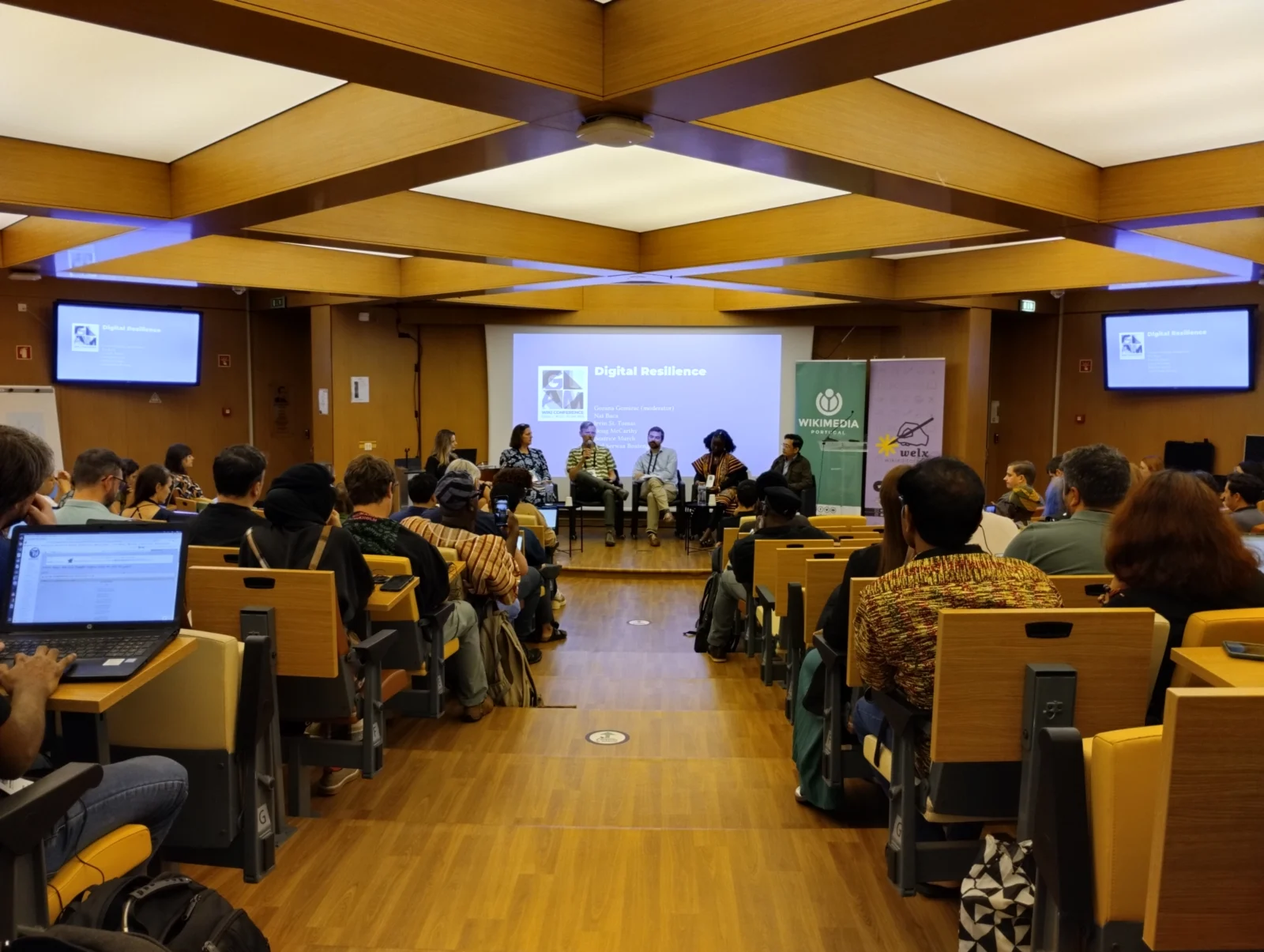
Photo: Ilham Mufti Laksono · CC BY 4.0 · source
I recall a time as a child, flipping through encyclopedias, trusting every word implicitly. Today, children navigate a world where every piece of information on a screen can be altered, artificially generated, or entirely fabricated. Distinguishing truth from fiction is often a challenge for adults, let alone for adolescents who are still developing their critical thinking. In this environment, the role of schools is evolving — it's no longer enough to teach reading and writing; digital resilience has become essential.
What is Digital Resilience and Why Do Children Need It?
Digital resilience goes beyond avoiding online predators or cyberbullying. It's a comprehensive ability to critically evaluate online content, understand the algorithms that deliver it, and recognize manipulative techniques, including deepfakes and advanced disinformation. For children, whose brains are still developing, this skill is paramount. A recent study from the University of Cambridge indicated that adolescents are particularly susceptible to deepfakes because their prefrontal cortex, responsible for critical evaluation and impulse control, is still maturing. Without targeted education, we risk children becoming easy targets of manipulation.
The Deepfake and Disinformation Challenge for the Young Generation
The proliferation of AI-generated content, from text to images, videos, and audio, fundamentally alters the digital landscape. Deepfakes, realistic artificially created visuals and sounds, can be used to spread misinformation, damage reputations, or even perpetrate fraud. For children, detecting such manipulation is especially difficult as they rely on visual and auditory cues as proof of truth. Traditional media literacy, primarily focused on text-based disinformation, is no longer sufficient in this new context. New programs must explicitly address multimodal AI-generated content.
New Educational Approaches: Beyond Basic Literacy
Schools worldwide are beginning to respond to this challenge with new, proactive educational programs. These focus on practical learning that helps children develop critical thinking and digital resilience. For instance, the European Commission released new guidelines in July 2026 for digital resilience education in European schools, emphasizing the integration of practical exercises, such as analyzing manipulated videos and audio clips, into existing curricula.
Case Study: The 'Digital Detectives' Program in Manchester
A secondary school in Manchester, UK, implemented a program called 'Digital Detectives' in September 2025. Over a six-month period, students in Year 9 (13-14 years old) participated in weekly workshops focusing on source verification, reverse image search, and AI content detection tools. Pre- and post-program assessments showed a 25% increase in students' confidence in identifying manipulated media and a 15% reduction in their likelihood to share unverified information. This example demonstrates that a systematic and practically oriented approach yields measurable results.

Furthermore, a UNESCO pilot program across five countries showed that students aged 12-15 who completed a 12-week critical thinking module improved their ability to identify AI-generated text and images by an average of 35% compared to a control group.
Checklist: How to Evaluate Digital Resilience Curricula in Schools
For schools aiming to effectively prepare children for the online world, I recommend focusing on the following criteria when evaluating or developing a curriculum:
- Practical Exercises: Does the curriculum include active analysis of deepfakes, source verification, and the use of detection tools?
- Content Currency: Is the content regularly updated to reflect the latest AI technologies and types of disinformation?
- Interdisciplinary Approach: Is digital resilience integrated across various subjects (e.g., computer science, civics, language arts)?
- Critical Thinking Development: Does the curriculum encourage discussion, questioning information, and forming reasoned arguments?
- Psychological Dimension: Does the program address the psychological impacts of online manipulation and teach children how to cope with uncertainty?
- Parental Involvement: Does the school offer resources or workshops for parents to support children's learning at home?
- Impact Measurement: Are mechanisms in place to assess the program's effectiveness and its influence on student behavior and skills?
Limitations and Risks: Why It's Not Easy
Despite the clear benefits, implementing such programs is not straightforward. A survey across 15 EU member states revealed that only 18% of teachers felt adequately prepared to teach students about deepfakes and advanced forms of online manipulation. Lack of training, time constraints in curricula, and the rapid evolution of technology are major obstacles. We must recognize that technical solutions alone are insufficient. This is an ongoing battle that requires continuous educator training and a flexible approach to teaching.
The Consequence of Inaction: Loss of Orientation and Trust
If schools and parents do not actively cultivate children's digital resilience, the consequences can be severe. Children unable to navigate the flood of manipulative content are at risk of making poor decisions, losing trust in verified information sources, and ultimately experiencing increased anxiety and feelings of helplessness. The European Commission warns of a growing 'trust deficit' among youth who struggle to discern reality from fiction online. This can have long-term impacts on their mental health and ability to function in society.
When General Advice Isn't Enough: The Role of an Experienced Partner
Developing and implementing an effective digital resilience curriculum is a complex task that often exceeds the typical capacities of schools. Especially in an area where technology evolves so rapidly, it's crucial to have a partner who understands both the pedagogical and technological challenges. At one-o-one.cz, through our onesafety project, we help schools and educational institutions design and implement programs that are current, effective, and responsive to the specific needs of students and educators. It’s not just about tools, but about a comprehensive strategy and methodology that is sustainable and measurable. [internal link: https://one-o-one.cz/onesafety]
Conclusion and Next Step
Digital resilience is not just a skill; it's a necessity for survival in the modern world. Schools have a unique opportunity and responsibility to prepare children for this reality. I do not recommend waiting for further studies or directives. Every school should immediately begin reviewing its existing media literacy programs and consider how to integrate teaching about deepfakes and AI-generated content. A first step could be to assess the readiness of your educators and explore available resources for their training. Don't let your students wander in digital chaos – equip them with the tools to become critical and resilient internet users.
FAQ
What is the main difference between traditional media literacy and digital resilience?
Traditional media literacy often focuses on fact-checking and recognizing text-based disinformation. Digital resilience goes further, encompassing the critical evaluation of multimodal content (videos, audio, images), deepfake recognition, and understanding the algorithms that shape online experiences.
Why are deepfakes particularly dangerous for children?
Children and adolescents are particularly susceptible to deepfakes because their brains, specifically the prefrontal cortex responsible for critical thinking and impulse control, are still developing. This makes it harder for them to distinguish between reality and artificially created content.
What are the biggest obstacles to implementing digital resilience programs in schools?
Key obstacles include insufficient teacher training, limited curriculum time, and the rapid evolution of technology, which makes it challenging to keep content current and relevant. Only 18% of EU teachers feel prepared to teach about deepfakes.
What can parents do to support their children's digital resilience?
Parents should actively discuss the content their children consume online, teach them to verify sources, use reverse image search tools, and encourage critical thinking. It's also important to lead by example and engage with programs offered by their child's school.
Sources & references (4)
- https://www.unesco.org/en/articles/global-trends-digital-citizenship-education-building-resilience-against-ai-generated-disinformation-report-2026
- https://commission.europa.eu/news/european-commission-publishes-guidelines-digital-resilience-education-european-schools-2026-07-15_en
- https://www.cam.ac.uk/research/news/adolescent-vulnerability-to-deepfakes-cognitive-science-perspective-study-2026
- https://www.ed.gov/news/press-releases/us-department-education-releases-framework-k-12-digital-citizenship-and-media-literacy-2026
You might also like
 Child Online SafetyEnd of Hourly Limits: How the View on Children's Digital Health is ChangingThe American Academy of Pediatrics changed its screen time recommendations for children. It's no longer just about hours, but about quality, context, and psychological impact. What does this mean for parents and schools in 2026?Čvc 31, 2026
 Child Online SafetyGenerative AI and Children: A New Era of Digital ProtectionGenerative AI is transforming children's online world. Understand the risks (deepfakes, mental health) and learn concrete steps for child online protection. A practical guide for parents and schools.Čvc 29, 2026
 Child Online SafetyThe New Era of Digital Child Protection: How Regulation and AI are Redefining Online SafetyIn 2026, child online safety is evolving. From new EU and US regulations to AI assistants for parents and schools. Discover how to ensure online safety.Čvc 27, 2026
Where is your marketing burning money?
AI audit and implementation for business owners. From diagnosis to deployment.
Get an audit