EU AI Act: What August 2, 2026 Means for High-Risk & Generative AI
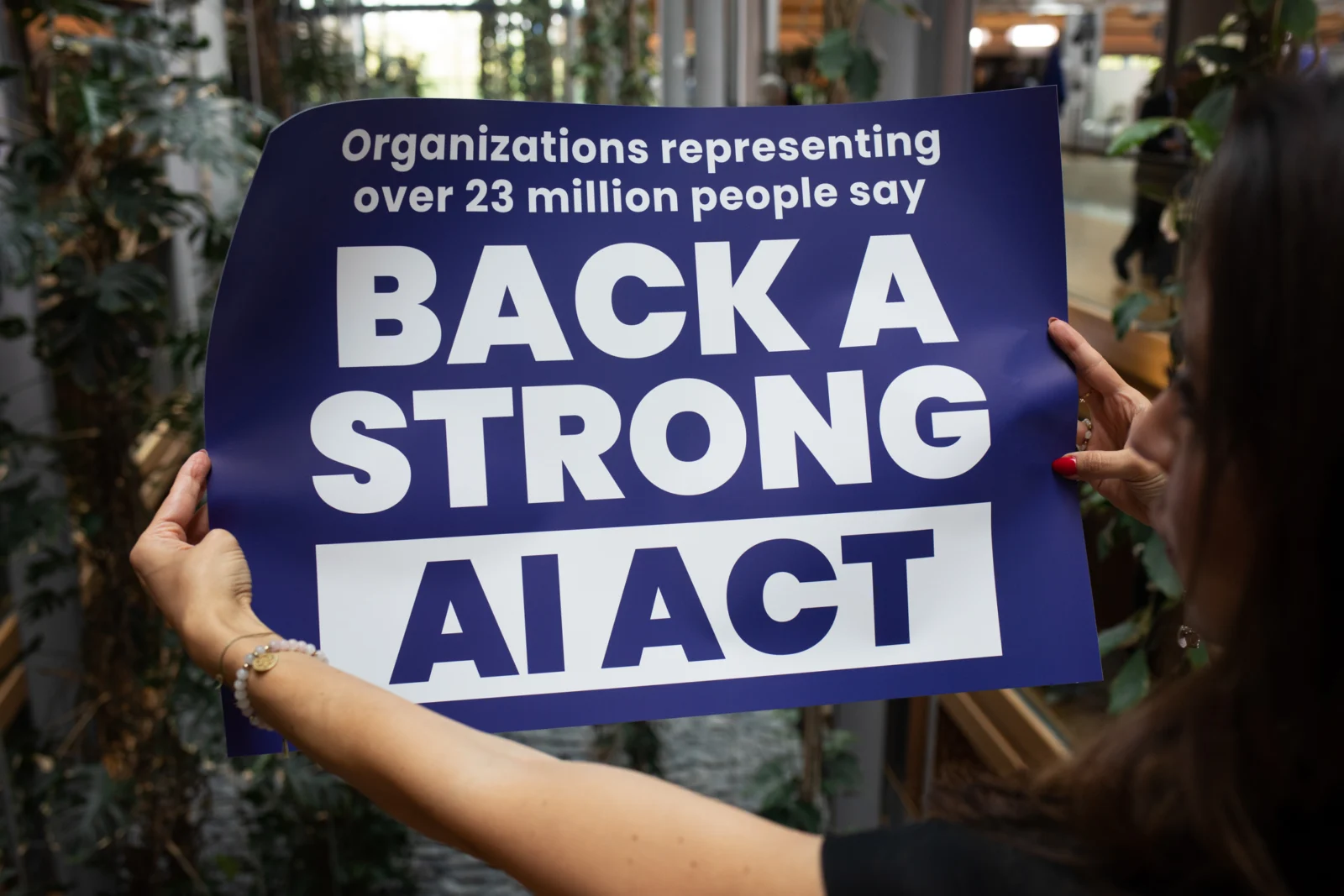
Photo: Ekō (formerly SumOfUs) · CC BY 2.0 · source
The European Parliament approved the Artificial Intelligence Act (EU AI Act) back in March 2024, but the full enforceability of most of its key provisions comes into effect on August 2, 2026. This date marks a turning point for every company developing, deploying, or using AI systems within the European Union, particularly those classified as “high-risk” and those that generate content. The preparation window is closing, and it's essential to understand exactly what this means for your business.
What is “High-Risk” AI and Why Does it Matter?
The EU AI Act introduces a four-tiered approach to risk, ranging from minimal to unacceptable. The most stringent regulation applies to systems classified as “high-risk.” These systems are defined based on their potential impact on individuals' health, safety, and fundamental rights. The list of high-risk areas is extensive and includes, for example:
- Critical Infrastructure: AI in the management of transport, energy, or water supply, where a failure could endanger lives and health.
- Education and Vocational Training: Systems used for student admission, assessment of learning outcomes, or determining educational levels.
- Employment: AI for recruitment, performance evaluation, or promotion decisions.
- Law Enforcement: Systems for assessing the risk of committing a crime, the reliability of evidence, or for profiling.
- Migration and Asylum Management: AI for verifying travel documents or assessing applications.
- Access to Essential Private and Public Services: For instance, systems for credit scoring.
If your company develops or uses AI in one of these categories, you must meet a series of strict requirements, including a robust risk management system, technical documentation, logging capabilities, human oversight, and the completion of a conformity assessment before placing the system on the market. This is not merely a bureaucratic exercise – it's fundamental to ensuring the safety and reliability of AI.
Transparency of Generative AI: Article 50
One of the most far-reaching provisions coming into force on August 2, 2026, is Article 50, which addresses transparency. This imposes obligations on providers and deployers of certain AI systems, especially generative ones. In practice, this means:
- Informing Users: You must clearly inform people that they are interacting with an AI system (e.g., a chatbot), unless it is obvious from the context.
- Content Labelling: The outputs of generative AI systems (e.g., text, images, video, audio) must be machine-readably marked as artificially generated or manipulated. While the deadline for machine-readable labeling was provisionally extended to December 2026, other transparency requirements apply from August.
- Deepfakes: If AI creates or manipulates content resembling real persons, events, or objects (deepfakes), this must be clearly indicated.
- Emotion Recognition and Biometric Categorization: Users must be informed about the operation of these systems.
These requirements apply not only to high-risk systems but to any AI system falling into one of the four specified transparency situations. The goal is to reduce the risk of deception, misinformation, and to preserve trust in online content. This means that even marketing agencies and content creators using generative AI must ensure their outputs are clearly labeled.
The Risk of High Fines and Sandboxes as a Safety Net
Non-compliance with the EU AI Act can have severe financial consequences. Fines are tiered according to the severity of the violation and can be substantially higher than those we're familiar with from GDPR.
- Prohibited AI Practices: Up to 35 million EUR or 7% of the company's total worldwide annual turnover for the preceding financial year, whichever is higher.
- Violation of High-Risk System Obligations: Up to 15 million EUR or 3% of total worldwide annual turnover.
- Providing Incorrect or Misleading Information: Up to 7.5 million EUR or 1% of total worldwide annual turnover.
Lower thresholds apply to Small and Medium-sized Enterprises (SMEs). It's clear that these penalties are designed to be dissuasive and ensure a serious approach to AI regulation. Furthermore, for US companies with significant revenue in Europe, losing access to the EU market can pose a greater risk than the fines themselves.
Fortunately, the EU offers a tool to help companies with compliance: AI regulatory sandboxes. EU Member States are required to establish at least one such sandbox by August 2, 2026. These controlled environments allow developers to test and validate innovative AI systems under regulatory supervision, receive feedback, and address compliance issues before full market deployment. Participation in sandboxes is often free for startups and SMEs.
How to Prepare for August 2, 2026?
The deadline is approaching, and inaction is not an option. If your company falls under the EU AI Act, you should:
- Inventory AI Systems: Identify all AI systems you develop, deploy, or use, and classify them by risk.
- Implement a Risk Management System: For high-risk systems, robust processes for identifying, assessing, and mitigating risks are essential.
- Ensure Transparency: For generative AI and interactive systems, implement mechanisms for informing users and labeling content.
- Documentation and Audit Logs: Maintain detailed technical documentation and audit logs of AI system operations.
- Human Oversight: Ensure that high-risk systems are subject to meaningful human oversight.
- Consider a Regulatory Sandbox: If you are developing innovative but potentially risky AI, explore the option of testing in a regulatory sandbox.
AI regulation is a global trend, and the EU AI Act sets standards that influence the entire world. A proactive approach to compliance is not just about avoiding fines, but about building trust, an ethical approach, and sustainable AI development in practice. At one-o-one.cz, we actively monitor these trends and help companies implement AI strategies that comply with new regulations, for example, within our one-AI-agent project, which focuses on the ethical and transparent deployment of AI agents.
FAQ
Q: Who is affected by the EU AI Act? A: The regulation applies to providers (developers), deployers (companies using AI), importers, and distributors of AI systems in the EU, as well as entities outside the EU whose AI systems impact the EU market.
Q: What are the maximum penalties for non-compliance with the EU AI Act? A: The highest fines for violating the prohibition of unacceptable AI practices can reach up to 35 million EUR or 7% of the company's worldwide annual turnover, whichever is higher.
Q: What is an AI regulatory sandbox and what is its purpose? A: An AI regulatory sandbox is a controlled environment established by Member State authorities where companies can test and validate innovative AI systems under supervision, aiming to ensure compliance with regulations before full market deployment.
Q: Do transparency obligations only apply to high-risk AI? A: No, transparency obligations under Article 50 apply to any AI system that interacts with people, generates synthetic content, uses emotion recognition, or biometric categorization, regardless of its risk classification.

FAQ
Who is affected by the EU AI Act?
The regulation applies to providers (developers), deployers (companies using AI), importers, and distributors of AI systems in the EU, as well as entities outside the EU whose AI systems impact the EU market.
What are the maximum penalties for non-compliance with the EU AI Act?
The highest fines for violating the prohibition of unacceptable AI practices can reach up to 35 million EUR or 7% of the company's worldwide annual turnover, whichever is higher.
What is an AI regulatory sandbox and what is its purpose?
An AI regulatory sandbox is a controlled environment established by Member State authorities where companies can test and validate innovative AI systems under supervision, aiming to ensure compliance with regulations before full market deployment.
Do transparency obligations only apply to high-risk AI?
No, transparency obligations under Article 50 apply to any AI system that interacts with people, generates synthetic content, uses emotion recognition, or biometric categorization, regardless of its risk classification.
Sources & references (6)
- https://vertexaisearch.cloud.google.com/grounding-api-redirect/AUZIYQGjPXW9HbQwVkD1-Mm0Qps9dAptTWfKdCqmayIRQjbBzGww0aXzPiaJHg5-ZGjSTvET_8UjJVFNHJwujMMOE-1LqJfnTinMz9BgrDrU1QmHdee_P-_dY0mEGa0b2YJjVCbjBDS174zibpcm9Q==
- https://vertexaisearch.cloud.google.com/grounding-api-redirect/AUZIYQGTQPapox2febZoHO9Cxvky2dq0gakVhsV6jpTFw4Ytm-kZApWnpga4zX4QqVeJlbKmMIxp_RPja8Ud5gTOXMdRsonVYyIrwqxO95xogQsFR6AWGGLiDGPD4Dm57wsPRCtkF6mYfCFJPQmZzr8dma6o4voWZcU=
- https://vertexaisearch.cloud.google.com/grounding-api-redirect/AUZIYQGP5L_U_9XdV34992eozxZQT_a8ZAgTaeemMPLWSuj_jZgGb36_0JooOYSwtO-jYEVEw9u8tCur0jwPUNYcJMvpU8lOMhyCx2sR-IX4Nu1GH7KjGCQhRTaf1QpjIk-YVtbfyPE6OzKGZdN7uaye_p3SUbAfY0Cthpp6mLCnLbYj-kivU9cJVQrwDiNyeQ=
- https://vertexaisearch.cloud.google.com/grounding-api-redirect/AUZIYQExkvEZloI9F13DWeVRJWhr2FKQR2t4_F3FJXKEiISLcT13yd8m6UqRLVGudV43KI4E6SgoMPthvMQLV4zneetqw5qls3qtYHFxiy6ft0GcWuVvy0ZbKQxftDdYczvsEGnRBETmrKLPvN5Y85kH60LW1vKFjCgO1JIiB9uOgMwu0MBfNxYL6od7LW2H1Rm2lkOQWlOAlXFk
- https://vertexaisearch.cloud.google.com/grounding-api-redirect/AUZIYQHwf137NxsecqTTcFw7fHCHJxgaL3ZMsKQbdIa46RhL5h8jmaQTcsiT8NWqlxN9oBw5O15eqoyqZQ4S_e-2LpjcLJDsCoApkBZEq5AHxWDBhdrr3VEb7xsfNRNSJeTt5sgeRCav6LzXlhC9sOAkq4wzL76EfQ==
- https://vertexaisearch.cloud.google.com/grounding-api-redirect/AUZIYQHhbRn4hxRrnjByAmlycaYpsUaVzxQYEOlSpoOThUpGsYZX_5dRWtWveFDJKG1sHflHtl8EYH_v3Est45iD0wklfQ_f36ZAowmVdwStZQnH1L4sNA4Ilty40WYPU6gD-Gtqntmthxgi5JzqTXqGaONx4dgiIObCX-cYDAWnLBRvak-vBARmcggbjIpdbqdsGYC-57FARZcn8YJFmg==
You might also like
 AI & MarketingAI and the Human Factor in Marketing: Who's in Charge and What Skills We Need in 2026In 2026, AI skills are the most sought-after globally. Discover how marketer roles are changing, what key skills you need, and how to stay ahead in the AI era.Čvc 31, 2026
 AI & MarketingThe EU AI Act's Two-Clock Problem: What Applies from August 2, 2026Navigate the EU AI Act's staggered deadlines. Understand what applies from August 2, 2026, and how to avoid penalties for GPAI and transparency obligations.Čvc 30, 2026
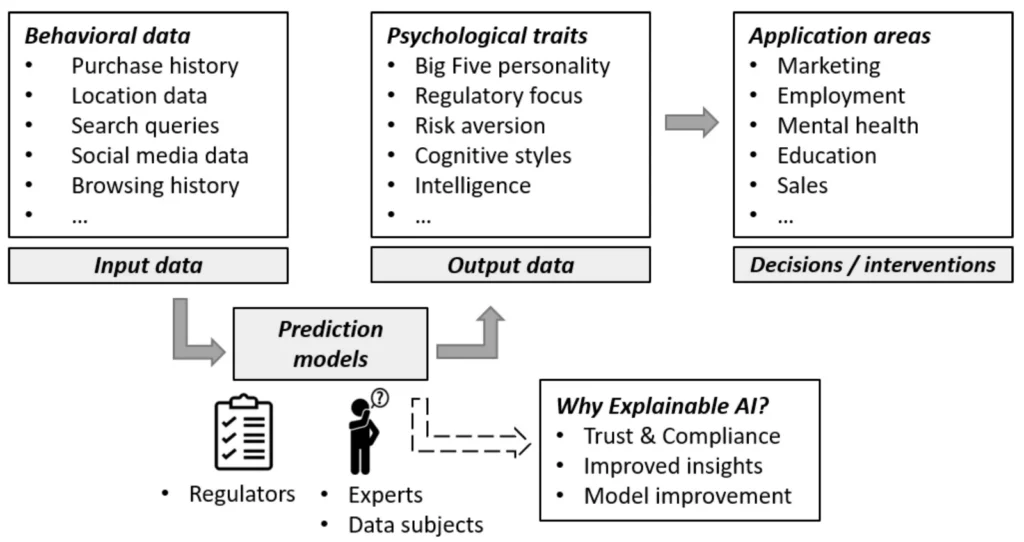 AI & MarketingPredictive AI in Marketing: Goldmine or Ethical Minefield?Predictive AI is revolutionizing marketing personalization. Discover how to maximize ROI in dynamic creative and micro-segmentation while navigating ethical boundaries and regulations.Čvc 29, 2026
Where is your marketing burning money?
AI audit and implementation for business owners. From diagnosis to deployment.
Get an audit