AI Act in Practice: Labeling AI Content and Chatbots Becomes Mandatory Today

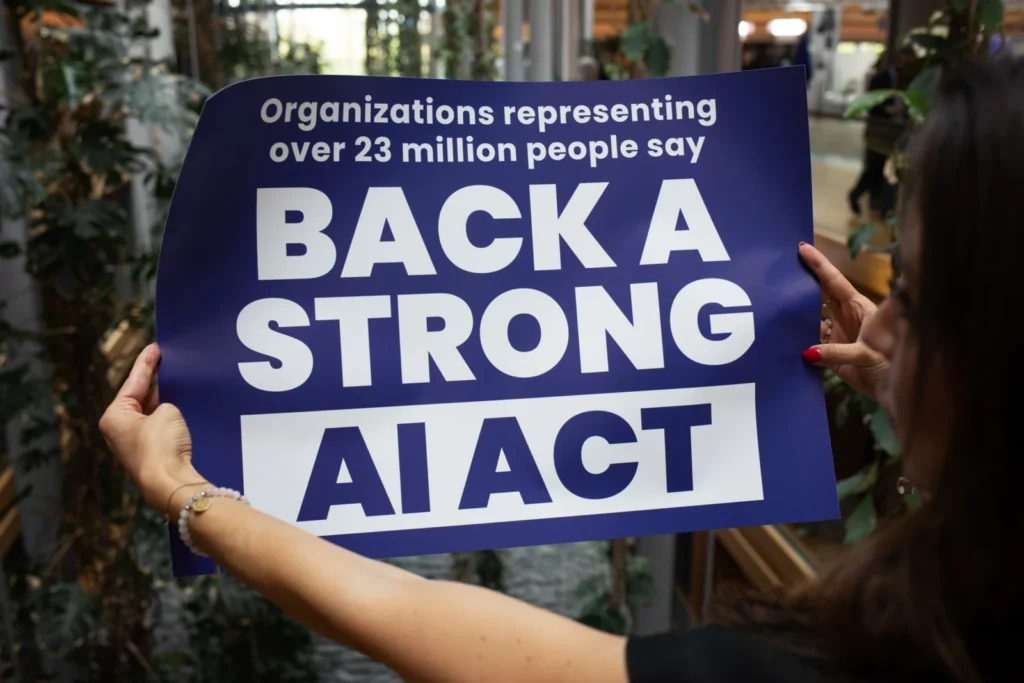
Photo: Ekō (formerly SumOfUs) · CC BY 2.0 · source
Today, August 2, 2026, the European Union initiates the full application and enforcement of key provisions of the Artificial Intelligence Act (AI Act). For businesses, this means an immediate obligation to implement transparent labeling of AI-generated content and clearly communicate when users are interacting with AI systems. The goal is to increase trust and reduce the risk of manipulation in the digital space, where AI is becoming increasingly ubiquitous.
The End of Invisible AI: New Transparency Rules
The era of artificial intelligence operating behind the scenes without clear identification is over. The European Commission, through its AI Office, begins enforcing rules today that require AI systems to inform users they are interacting with AI, and that all content generated or substantially modified by AI technology must be clearly labeled. These measures apply to all providers of General-Purpose AI (GPAI) models, which form the foundation of many AI tools and services, including AI agents and content generators.
Why does this matter? In digital marketing and communication, we encounter AI-generated content daily – from texts and images to videos and audio. Without clear labeling, the line between reality and synthetic creation blurs, potentially leading to misinformation, manipulation, and erosion of trust. According to recent research by Pathlock, 23% of organizations have already experienced AI-related incidents, with over half (51%) unsure how many AI agents operate within their systems. This only underscores the urgency of transparency and proper governance.
What Exactly Is Changing? Two Key Obligations
The AI Act introduces two main areas of transparency that have an immediate impact on businesses:
- Labeling AI-Generated Content: All deepfakes (images, videos, or audio created or altered using AI) must be clearly labeled. This also applies to any other content that has been AI-generated or significantly modified. The labeling should be machine-readable to facilitate easier detection of such content. The aim is to reduce deceptive practices and manipulation, helping people make informed choices.
- Transparency for Interactive AI Systems: Chatbots and other interactive AI systems must inform users that they are interacting with artificial intelligence, not a human. This is particularly crucial in customer support, sales, and any communication where a user might mistakenly assume human interaction.
These requirements are effective as of August 2, 2026. Companies that fail to comply face fines that can amount to up to 7% of the company's annual worldwide turnover or 35 million euros, whichever is higher.
Practical Steps for Businesses: Ensuring Compliance
Implementing these rules requires more than just a quick fix. A systematic approach is needed:
- Content and Tool Audit: Review all content created and managed by your company. Where do you use generative AI? What AI tools do you integrate into your processes? Identify all points where content is created or modified using AI.
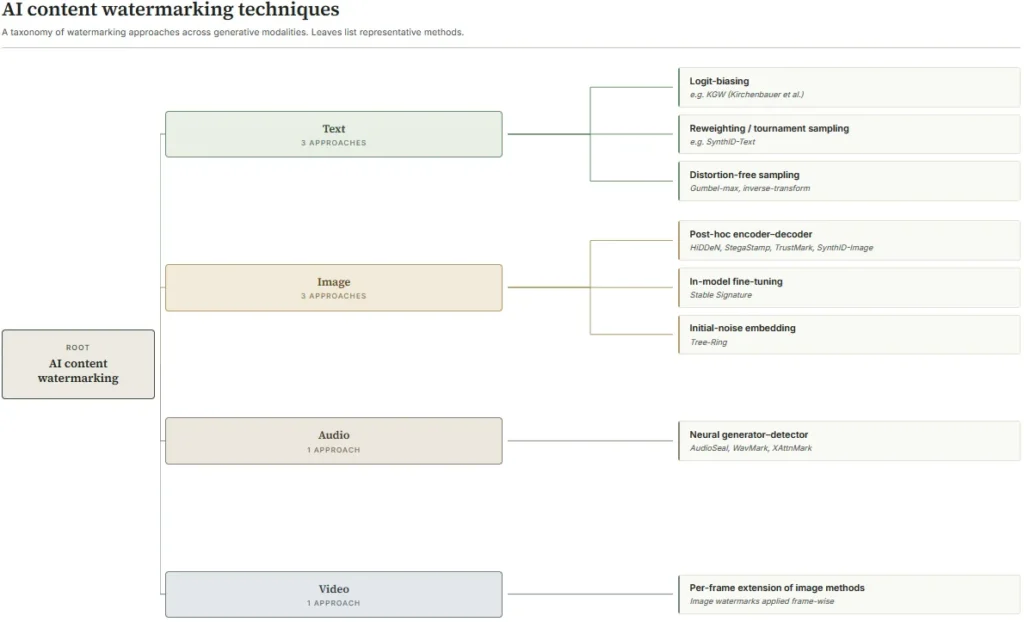
- Define Internal Labeling Processes: Create clear guidelines on how and when AI-generated content should be labeled. It should be clear who is responsible for labeling and how the labeling is technically implemented (e.g., watermarks, metadata, text warnings).
- Team Training: Ensure that marketing, communication, product, and legal teams understand the new obligations. Education is key to preventing unintentional breaches. UNESCO, for example, in collaboration with LG AI Research, launched a free online course on AI ethics, globally accessible, covering topics like transparency and accountability.
- Update AI Systems and Chatbots: Review the settings of all chatbots and interactive AI systems to explicitly disclose their AI nature at the beginning of the interaction.
- Legal and Ethical Assessment: Collaborate with legal experts to ensure your practices comply with the AI Act and other relevant regulations. Also, consider the broader ethical implications of AI use and transparency.
Case Study: When Transparency Builds Trust
One of our e-commerce client companies began experimenting with AI a few months ago to generate personalized product descriptions and advertising copy. Initially, they focused on efficiency and speed. After an internal audit we conducted, it became clear that almost 40% of their marketing content was AI-generated without any communication to customers.
We decided on a proactive approach and implemented a tiered labeling system. For shorter texts, a subtle but clear note stating “Text generated by AI for personalization” appeared. For longer descriptions and images, the label was more prominent, with a link to the company's AI policy.
The result? Over three months, they observed a slight decrease in click-through rates for labeled content (approximately 5% for texts, 8% for images), but simultaneously, there was a 7% increase in Average Order Value (AOV) and a significant improvement in sentiment in customer reviews, where customers appreciated the honesty and transparency. Trust proved more valuable than the initial concern about metric decline.
Author's Judgment: Transparency as a Competitive Advantage
Some view regulation as another bureaucratic burden. I see it differently. I see an opportunity for those who can transform transparency into a competitive advantage. In an era where AI is becoming a commodity, trust will be the new currency. Companies that are not afraid to openly communicate their use of AI will gain customer loyalty and build a reputation as responsible innovators.

What do you risk by not acting? Besides the mentioned fines, it's primarily a loss of trust. In the digital age, where reputation is made and lost in minutes, you cannot afford to have your customers feel deceived or manipulated by invisible AI. The consequence of inaction is not just the risk of legal sanctions, but primarily the jeopardizing of the very essence of the customer relationship.
When general guidelines are not enough, and you need a strategy that considers the specifics of your business while ensuring compliance with new regulations, it's time to bring in an experienced partner. At one-o-one.cz, we help companies implement AI strategies that are not only effective but also ethical and fully transparent. We can audit your AI processes, propose concrete solutions for content labeling, and train your teams to be ready for the new era of regulation.
Appropriate next step: Start with an internal audit. Identify where AI generates or modifies content throughout your company and where interactions with chatbots occur. Based on this, create a plan for implementing transparent labeling and communication.
---
FAQ
Q: Which specific types of content must be labeled as AI-generated? A: Deepfakes (images, videos, audio created or substantially altered by AI) and any other content that has been generated or significantly modified by artificial intelligence and could deceive users about its origin must be labeled.
Q: What are the penalties for non-compliance with the AI Act's transparency rules? A: Companies that fail to comply with the AI Act's rules may face fines of up to 7% of their annual worldwide turnover or 35 million euros, whichever is higher.
Q: Do internal AI tools not directly exposed to customers also need to be labeled? A: The AI Act primarily focuses on AI systems that interact with users or produce content for public consumption. Internal tools that do not directly affect external communication will likely not require the same level of external labeling; however, internal governance and awareness of their use are crucial for overall compliance and risk management.
Q: Are there any exceptions to the obligation to label AI-generated content? A: The AI Act allows for exceptions for artistic, creative, satirical, or fictional works if their AI nature is obvious or transparently communicated. The goal is to protect against manipulation and disinformation, not to limit creativity.
FAQ
Which specific types of content must be labeled as AI-generated?
Deepfakes (images, videos, audio created or substantially altered by AI) and any other content that has been generated or significantly modified by artificial intelligence and could deceive users about its origin must be labeled.
What are the penalties for non-compliance with the AI Act's transparency rules?
Companies that fail to comply with the AI Act's rules may face fines of up to 7% of their annual worldwide turnover or 35 million euros, whichever is higher.
Do internal AI tools not directly exposed to customers also need to be labeled?
The AI Act primarily focuses on AI systems that interact with users or produce content for public consumption. Internal tools that do not directly affect external communication will likely not require the same level of external labeling; however, internal governance and awareness of their use are crucial for overall compliance and risk management.
Are there any exceptions to the obligation to label AI-generated content?
The AI Act allows for exceptions for artistic, creative, satirical, or fictional works if their AI nature is obvious or transparently communicated. The goal is to protect against manipulation and disinformation, not to limit creativity.
Sources & references (6)
- https://vertexaisearch.cloud.google.com/grounding-api-redirect/AUZIYQGWVONbzOueKUjxSA2hRpmd9hxA2UsDELNV505yc0_VD-vYw7297E-VbsiP5Xa4RvcRRsxeYkNok_UnP8l0Z5-TFgdfXyzRQF-hj-25eEfDYeyU-GcmudWvXzSAyIGKQ5jzsJQABa0aRW7UweHro_oQU5KZWHYiwxH_6Q==
- https://vertexaisearch.cloud.google.com/grounding-api-redirect/AUZIYQFgU1tEhVNhR7rxcIN2MWBdS-BV3LvsyZojpbkDchnlRAk2XfVYobb1jLgFmswctCcLGKfN9oR96yT_TdyF3QGrr5BcoKZHwM5uwdXzi1YiUrcyB-KVb5seNdUIsjKOMS0Pu9yH302Qv5kaiuEFNpYvoyhsVREvpGMvXCwIDHzD7hDomg==
- https://vertexaisearch.cloud.google.com/grounding-api-redirect/AUZIYQEFvx4Th4foZke8aO7kJbcPO981E-9-PY-ttb-x5AV8U2Z9XW0lMpZoRSgtFDUv5brPDbOL1H82Ancr1M91nk_eAqVt0LjcEpL7lMtSKUQ6YOsdeHpV-zvV2s7z6wjWIaf1ES2sagJukiN9YcMKrV6I0PYLLY7n1U40YVsdT5x6_gt6sSWni-An-O3bvBZMryc2PzjyJHLhPVpDHkzRgubT9XEisN-CyL8WsZJfhQrgOgDp5DWsTVpqQqJNLA==
- https://vertexaisearch.cloud.google.com/grounding-api-redirect/AUZIYQEddxMq0TY12GGRIC-NoaRssFhEAsHtHOZnxKY4fvyrTPmquwtog8uh0f_2L7hiC6A-fFjq9Q8Mli52h_DB7rlVG4sTQxoNsSbNHiE8nJNaf-Y5LXXlyxokMoEOckLAF4r-GmrI0qVtREmgvCqCjpC5OZvxFextrPLdHELwkd3L
- https://vertexaisearch.cloud.google.com/grounding-api-redirect/AUZIYQEOUGNJcc1hlu6Ni_r7X8pQSoHufKegRdxP1E2e1eDrXPtELATXDghb-nODv4O3GsHfJx5KK4Om1FXdMlH6A18lHIPaDmOF-mlw8IeKH7rHniNAkCK2EtSyupMvEhxHe8c1ECAUJnPkGR9cZmsw082zd0QxLg-cU71_G895Dq3zWKTd3NVyIo-48MnIN5rnWT13v_Q=
- https://vertexaisearch.cloud.google.com/grounding-api-redirect/AUZIYQETNdnffYiQ8ZuIddbZjFYpj3OEeLjHBt_WxSV9VvqZf-FcpphiYnudj8pbWaMo_gK1-mlME_wuPM2lAMGqN4GHQWgjP08ggftc9S3n3MLdzSkJlJYhdDmWLO40MeSL6jCwRs4h_bXMNcyN7DiCt3GergFqF2T1dKjpqGI8PdbTlIvgQCjMXB3ZFVEQBvb9uog0grwFQgyVHbRDZua1tq37_tXq82nQzu7Je7rbHD-giSk_vxJbmBTwABbCtR7spLbGxQhBtlK72O9EkXDWQI0W7SCSy1lrTzgRM8X0eQ==
You might also like
 AI & MarketingEU AI Act: What Truly Applies from August 2, 2026?Discover which EU AI Act obligations, including transparency and enforcement, come into force on August 2, 2026, and how to avoid significant fines.Srp 2, 2026
 AI & MarketingThe End of Single-Task Tools: Multi-Agent AI Systems Are Reshaping MarketingMulti-agent AI systems are revolutionizing marketing automation. Discover how they work, the savings they offer, and how to maintain human oversight in the era of autonomous agents.Srp 1, 2026
 AI & MarketingInvisible AI: How to Maintain Brand Trust in the Era of Undetectable ContentAI content is everywhere and increasingly hard to detect. Learn how to maintain brand trust, comply with the EU AI Act, and avoid 'AI slop' in marketing 2026.Srp 1, 2026
Where is your marketing burning money?
AI audit and implementation for business owners. From diagnosis to deployment.
Get an audit