EU AI Act: What Truly Applies from August 2, 2026?

Photo: Ekō (formerly SumOfUs) · CC BY 2.0 · source
When the EU AI Act is mentioned, many companies have breathed a sigh of relief in recent months. News of postponed key deadlines for high-risk systems created the impression that there was still plenty of time for compliance. The reality, however, is different. As of August 2, 2026, most of the AI Act's rules come into force, and active enforcement begins by the European Commission and national authorities. What was postponed only concerned a part of the regulation.
What Was Postponed and What Applies from August 2, 2026?
The most significant change, brought about by the so-called 'Digital Omnibus on AI' approved in June 2026, is the postponement of obligations for high-risk AI systems (listed in Annex III) from the original deadline of August 2, 2026, to December 2, 2027. For AI systems integrated into regulated products (Annex I), the deadline has been pushed even further to August 2, 2028. This offers a welcome relief and additional preparation time for developers and operators of complex AI solutions.
However, what remains unchanged and applies from August 2, 2026, without exception, are the transparency obligations under Article 50 of the EU AI Act. These obligations apply to a wide range of AI systems and affect anyone who uses AI in their activities for interacting with people, generating or manipulating content, detecting emotions, or biometrically categorizing users.
The 'Two-Hour Problem': Between Postponement and Immediate Reality
This is precisely where the core of the so-called 'two-hour problem' lies, which I have highlighted in the past. Many companies mistakenly believe that a postponement means a postponement of everything. The opposite is true. While companies have until the end of 2027 for high-risk systems, transparency rules are active today, and non-compliance can have immediate and serious consequences.
What exactly does Article 50 mean for your business?
- Informing about AI interaction: If your customers or users interact with a chatbot, virtual assistant, or any other AI system, they must be clearly and distinctly informed about it.
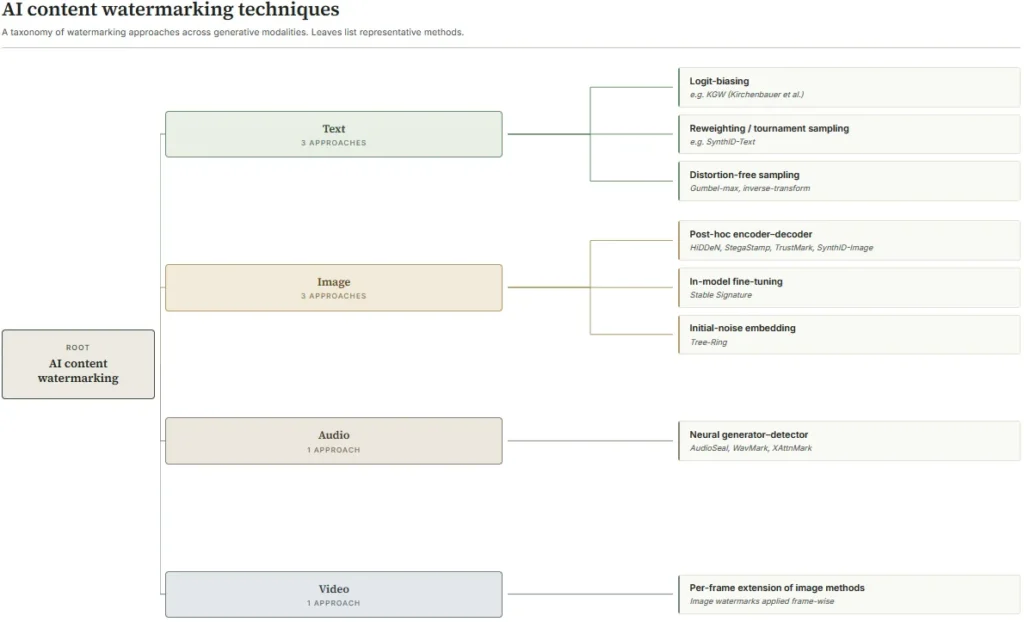
- Labeling AI-generated content: Any content (text, images, videos, audio) that has been generated or significantly altered by artificial intelligence (deepfakes, synthetic media) must be labeled as AI-generated. Specific watermarking requirements for synthetic audio, image, video, or text content have a transitional period until December 2, 2026, but the general labeling obligation applies.
- Transparency for systems detecting emotions or biometrically categorizing users: Increased transparency is required for such systems.
How to Identify Relevant AI Systems and Ensure Transparency
For many businesses, the challenge is to even ascertain where AI operates within their processes and what obligations apply to it. The following checklist will help you with an initial assessment:
AI Transparency Checklist (Article 50):
- Customer Interaction: Do you use AI chatbots, virtual agents, or other systems that communicate with users? (e.g., in customer support, on your website.)
- Marketing and Content: Do you generate AI texts for blogs, emails, social media? Do you create AI images, videos, or audio for campaigns? Do you manipulate existing content using AI (e.g., photo editing, voice alteration)?
- Personalization and Recommendations: Do you use AI for personalized product, service, or content recommendations that directly interact with the user?
- Internal Tools with User Interaction: Do your employees use internal AI tools (e.g., for generating reports, data analysis) that produce content or with which they actively interact?
- Emotion Detection/Biometric Categorization: Do you use AI to analyze customer emotions (e.g., from voice, face) or to biometrically categorize users (e.g., for targeting)?
If you answered 'yes' to any of these questions, it is crucial to ensure that your systems comply with the transparency requirements of Article 50. This includes clear and understandable communication to the user that they are interacting with AI, and appropriate labeling of all AI-generated content.

Consequences of Non-Compliance: Fines and Loss of Trust
The EU AI Act introduces some of the highest fines in the history of EU regulation. Violations of prohibited AI practices can incur fines of up to €35 million or 7% of global annual turnover, whichever is higher. For non-compliance with other obligations (which include the transparency rules of Article 50), penalties can reach up to €15 million or 3% of global annual turnover. Providing incorrect, incomplete, or misleading information carries a fine of up to €7.5 million or 1% of turnover.
These penalties significantly exceed, for example, GDPR fines and clearly signal the EU's determination to ensure that AI regulation has real impact. Besides financial penalties, there is also the risk of reputational damage and loss of customer trust, which can have long-term business consequences.
Author's Judgment: Proactive Approach as a Competitive Advantage
In my view, the biggest mistake is to wait until the last minute. Many companies focus on innovation but neglect the regulatory framework, which evolves just as quickly. While the postponement of obligations for high-risk systems is good news, it should not lead to a false sense of security. The real challenge lies in continuous auditing and adaptation. August 2026 is not a distant deadline but a moment when the tables turn. The consequences of inaction are too high.
Success in the AI era will not only be about technological sophistication but also about the ability to navigate a complex regulatory landscape. Companies that are proactive in AI transparency and governance will gain not only compliance but also customer trust and thus a competitive advantage.
Moving Forward: The Commercial Bridge and Next Step
Navigating the nuances of the EU AI Act, correctly categorizing your AI systems, and implementing effective compliance strategies can be challenging. Especially when legislation is constantly evolving and interpretations are being refined. In such situations, general guides are no longer sufficient; deep expertise and practical experience are needed.
If you are unsure whether your AI systems meet the new transparency obligations, or if you need help identifying potentially high-risk applications in your marketing and business processes, it's time for an audit. With the one-AI-agent project, we help companies understand the impacts of AI regulation and implement concrete steps to ensure compliance, from technical documentation to setting up internal processes and training. [https://one-o-one.cz/one-ai-agent]
Next step: Conduct an internal audit of all AI systems you use in your company. Focus on those that interact with users or generate content, and ensure they meet transparency obligations from August 2, 2026. Also, remember to start preparing for December 2027 for potentially high-risk systems.
FAQ
What does the postponement of deadlines for high-risk AI systems mean?
The postponement concerns obligations related to high-risk AI systems (Annex III), which are moved to December 2, 2027. For systems in regulated products (Annex I), the deadline is August 2, 2028. This gives companies more time to prepare these complex systems.
Which specific AI systems fall under the transparency obligations of Article 50?
Transparency obligations apply to systems that interact with people (e.g., chatbots), generate or manipulate content (e.g., AI texts, deepfakes), detect emotions, or biometrically categorize users.
How high are the fines for non-compliance with the EU AI Act?
Fines are divided into three categories: up to €35 million or 7% of global annual turnover for prohibited AI practices; up to €15 million or 3% for non-compliance with other obligations; and up to €7.5 million or 1% for providing incorrect information.
What should I do if I use generative AI models that were already on the market before August 2, 2026?
Systems generating synthetic audio, image, video, or text content that were on the market before August 2, 2026, have a transitional period until December 2, 2026, to comply with specific watermarking requirements. However, general transparency obligations for labeling AI-generated content apply from August 2, 2026.
Sources & references (10)
- https://www.holisticai.com/blog/penalties-of-the-eu-ai-act-the-high-cost-of-non-compliance
- https://www.dataguard.com/blog/eu-ai-act-timeline
- https://complyone.com/eu-ai-act-timeline
- https://www.atmmarketplace.com/articles/eu-ai-act-2026-what-banks-need-to-know-about-ai-governance-dora-and-cybersecurity/
- https://eur-lex.europa.eu/legal-content/EN/TXT/?uri=uriserv:OJ.L_.2024.1689.01.0001.01.ENG
- https://ai.europa.eu/news/commission-starts-enforcing-ai-act-rules-and-new-transparency-requirements-2-august-2026-07-30_en
- https://www.akin.com/en/insights/alerts/2026/07/eu-ai-act-amendments-defer-and-clarify-obligations
- https://www.lumenova.ai/blog/eu-ai-act-2026-news-new-deadlines-and-business-impact
- https://www.airia.com/eu-ai-act-risk-categories-which-tier-is-your-ai-system
- https://www.europarl.europa.eu/thinktank/en/document/EPRS_BRI(2026)760370
You might also like
 AI & MarketingThe End of Single-Task Tools: Multi-Agent AI Systems Are Reshaping MarketingMulti-agent AI systems are revolutionizing marketing automation. Discover how they work, the savings they offer, and how to maintain human oversight in the era of autonomous agents.Srp 1, 2026
 AI & MarketingInvisible AI: How to Maintain Brand Trust in the Era of Undetectable ContentAI content is everywhere and increasingly hard to detect. Learn how to maintain brand trust, comply with the EU AI Act, and avoid 'AI slop' in marketing 2026.Srp 1, 2026
 AI & MarketingAI and the Human Factor in Marketing: Who's in Charge and What Skills We Need in 2026In 2026, AI skills are the most sought-after globally. Discover how marketer roles are changing, what key skills you need, and how to stay ahead in the AI era.Čvc 31, 2026
Where is your marketing burning money?
AI audit and implementation for business owners. From diagnosis to deployment.
Get an audit