AI Agents Reshape Marketing: From Automation to Autonomous Campaign Management
Photo: jurvetson · CC BY 2.0 · source
According to Gartner's estimates, by 2028, at least 15% of day-to-day work decisions will be made autonomously through agentic AI, a significant increase from 0% in 2024. These figures clearly indicate that marketing is rapidly shifting from an era of mere automation to one of autonomous AI agents. We are no longer just talking about tools that simplify our work, but about systems that can independently make decisions and manage entire marketing campaigns with minimal human intervention. For marketers, this means a fundamental change in their role and the necessity to redefine their strategies.
What are AI Agents and How Do They Differ from Standard Automation?
AI agents are autonomous systems designed to pursue specific goals on behalf of a user or team. Unlike traditional automation, which follows static rules, AI agents can monitor multiple data sources, evaluate situations, decide on the best next actions, and execute those actions autonomously. They do not require constant human guidance. While generative AI creates new content based on a prompt, agentic AI goes further, capable of creating multi-step plans and executing tasks across various tools. The key difference lies in the AI agents' ability to perceive their environment, reason towards goals, and continuously learn from outcomes, moving beyond merely executing scripts.
The Programmatic Advertising Revolution: Predictive and Adaptive Campaigns

One of the areas where AI agents are causing the biggest revolution is programmatic advertising. Programmatic has always been about automation, but AI is pushing it to an entirely new level. AI algorithms analyze vast amounts of data in real-time to determine the best bidding strategies, optimize ad placements, and deliver personalized ads. Thanks to predictive analytics, AI agents learn what will work even before a campaign launches, reducing budget waste and increasing efficiency.
A prime example is Google Performance Max (PMax), which has become the dominant campaign type for enterprise advertisers. In 2026, PMax campaigns manage over 80% of total ad spend for the average enterprise account. Target ROAS (tROAS) bidding strategies in PMax achieve 38% higher return on ad spend (ROAS) in Q1 2026 compared to manual CPC strategies. The AI bidding engine processes over 70 million real-time signals per auction – including device type, location, time of day, search history, and conversion likelihood – setting optimal bids that human advertisers cannot manually replicate. Importantly, PMax uses audience signals as suggestions rather than restrictions, allowing Google's system to learn faster and find high-converting users across all channels.
Autonomous Customer Journey Management and Personalization
AI agents are not limited to advertising campaigns. They are also changing how companies interact with customers across the entire customer journey. By 2025, artificial intelligence is projected to handle 95% of all customer interactions. AI agents enable hyper-personalization at scale and autonomous customer service. They can analyze customer data, write and send personalized messages, manage ad campaigns, and adjust strategies, all without constant human supervision. Instead of traditional customer journeys following predefined rules, agentic systems decide which customers to target, determine the right message and channel for each, deploy the campaign, and learn from outcomes to refine their next decision.
What This Means for Marketers and Businesses
For marketers, this signifies a crucial shift. Instead of routine operations, their work is moving towards strategic oversight, defining goals, and setting guardrails for AI agents. People will be able to focus more on creative thinking, innovation, and a deeper understanding of the brand and customer. Companies that adopt AI agents early will gain a significant competitive advantage through the speed, accuracy, and personalization that AI offers. When we talk about process automation and optimization using AI, the topic of AI agents is central for us. At one-AI-agent, we focus on how to integrate these intelligent systems into business processes to truly deliver measurable results and free up human resources for strategic work.
Challenges and Ethical Considerations
With the increasing autonomy of AI agents come challenges. It is crucial to ensure compliance with data protection regulations like GDPR and prepare for a cookieless reality. Furthermore, potential algorithmic biases must be addressed, and the transparency of AI decision-making must be ensured. Human oversight remains essential for brand safety, creative quality, and governance to prevent unintended outcomes and maintain customer trust. The goal is not to replace the human marketer but to transform their work and enable them to achieve better results with less effort.
FAQ
Q: What is an AI agent in marketing? A: An AI agent is an autonomous system designed to achieve marketing goals, such as campaign management or customer journey personalization, with minimal human intervention.
Q: How do AI agents differ from standard automation? A: While standard automation executes tasks based on predefined rules, AI agents can perceive their environment, make data-driven decisions, and learn from outcomes to autonomously fulfill complex goals.
Q: How do AI agents impact programmatic advertising? A: AI agents analyze vast amounts of real-time data to optimize bidding, targeting, and budgets in programmatic advertising, leading to higher efficiency and personalization, for example, in Google Performance Max campaigns.
Q: Will AI agents replace marketers? A: No, AI agents will not replace marketers, but they will transform their role. Marketers will be able to focus on strategic thinking, creativity, and defining objectives, while AI agents handle autonomous execution and optimization.
Sources & references (10)
- https://vertexaisearch.cloud.google.com/grounding-api-redirect/AUZIYQGLNDna5xz8piRrQsX6jTHslNazK6rGumAJBApRKBYKeI68VJucynxOJ5NkmOisPN2YpgmwQ0O188kM6_g1CDNXVHW-_ad_HxdixoK1rHLgBdDLwOeE5bLbjKYEfsxA9EFbOd_GuTE_zWIbaIHD_K3Y5esWEkWoxoQ716VWw2W5CRvCl0JLNWieX5QgTSFqyxlkMjZwyHd6wkVksWwudOd4NwHEEqA=
- https://vertexaisearch.cloud.google.com/grounding-api-redirect/AUZIYQGSpdKXDpY2RLv2q7j6XGMWwXTSwriI9Ms8aLVneFexwGt9h8wMb0yxrE3NWAjWlDMgyduc_cPqqO8dJWcCJ2GE77TXWkniqyxlXfDkPFFWvgYB2gk6Kx2DAs5GmaN5g8VPjt1-YsvMAblzcgKtf5yxkrMrIPMib_0vU-I7mbEmuM3MmN95CQZ924FFX7c0
- https://vertexaisearch.cloud.google.com/grounding-api-redirect/AUZIYQGYpFbZ0gwe-4k-BppMGeqAM7z7wwScgLeJggtkF8436XBlDx8iIECc7Lj7DjldWXhCT2vWa6gPdWXhIl83_ZiYUOFqmXJTI3A9nuHtaudNCiKOEiD62XqBQ3iuLLByXs2nHNoLj1iWE_QXf8amtSa-t-Oe0bjTlroUmVYvfXHs3r1BRvpb2cGyqXvYJz8=
- https://vertexaisearch.cloud.google.com/grounding-api-redirect/AUZIYQEuH1tcRLwCt0MbVxXTnfzt9z2SvTfFR4pLcVhNhigY35lNPGhsgRMvhB4fUKZ9IV2j2GXKTND6W66ONBeHVtWmiDYXQTEnS-7Ejtu6J0Hr8vFnmC4DbCq9j4rwUEDO1YNxO7CGQ-JnuGDSCe3KiVs=
- https://vertexaisearch.cloud.google.com/grounding-api-redirect/AUZIYQHANWyzDMaNz9to2njC208z4SCfzc-tOQXR6Y5bK1jDokGZq8u9L9ilfE3ThshjQNT1ExZJg13UGmL7TXjeDs0c-U2tTGQSnDh1iPqfKj3c5Hx6A7qr1aQss3_m4o1wVwlvybYw0YjjnJ-qFRoBIJ3WFhs=
- https://vertexaisearch.cloud.google.com/grounding-api-redirect/AUZIYQEbLcMhwIAadl5AxwP2ZgPPfS23ifkBQrXAcFv9ZkBnRjsaqQgFOe6d-uFei8K0b1akWrXwdbIHmcS2IJv3-uqqRAvfZjDyBs92jhF-i7187zmCs3zb5i5P8cQh295PAiYD3VZTaHd-2P8=
- https://vertexaisearch.cloud.google.com/grounding-api-redirect/AUZIYQHbJvR3VS1QyopS_W6G0Lupxiuh-o-btrm7mP8hywrubGtkhdZ3f-KCc_-wlOddrBUAevCx3IZZ2Bfw6XcEQJfxAonGrCoSHyjDGNqedsFwqv6vm9Pqb5Z9GJNg9G04E8PpMsDbL-ZC6Yj5Axj40RcWfeWa3vCe9QnDWy_hGNyE6OmYlpEbsOdMHBFbSzb2REwU27D1a2vOuIqBPjGG
- https://vertexaisearch.cloud.google.com/grounding-api-redirect/AUZIYQFb5F1Mb9hpH_9NawjV3r7T-jkHq2QfMgN80kbwxRcbsHXDXN1CdAzt2wqH1n3W4yiayjt0YUnKUuRvFGAmBv8GOhPChHMpc_qy94_5Fd5lRQdwCHT1JUiO0UnKosiWYzkUS_TkqH5in6AUJaUqmxjd88A7qdv0PNzN9FcJqQveIE4YqLE-S03i0w=
- https://vertexaisearch.cloud.google.com/grounding-api-redirect/AUZIYQGPlEufSm6BzBzRBEcbvk-Vm3HLF3Y_TcDUVyPSFL-t_RsF7b1MezpcVgpyka0XuyUZVKSDFKzJx2aMUr_J_qH5bThmAE2rBeF5p3U4F9nAEBmMS6Jij1552BCEuvviiRmtWSe9QIXfIPF4MUEAfHv6
- https://vertexaisearch.cloud.google.com/grounding-api-redirect/AUZIYQFhFc01Mv4-4iJfB1W9QQf-nzhp-iz3MI88UieiTImalNaNgz-A9w6nfe1rfDht-zsU-JAWXztuYVEAc84UBqvg_FhuOU3X2Gn23Hd73w9FpwPUivufxOxtVNNmXRNgV9QALGCdvS_J0DKAlSJBaW9OZV9O7zya4UteRbnL-rzjmNA=
You might also like
 AI & MarketingEU AI Act: What Truly Applies from August 2, 2026?Discover which EU AI Act obligations, including transparency and enforcement, come into force on August 2, 2026, and how to avoid significant fines.Srp 2, 2026
 AI & MarketingThe End of Single-Task Tools: Multi-Agent AI Systems Are Reshaping MarketingMulti-agent AI systems are revolutionizing marketing automation. Discover how they work, the savings they offer, and how to maintain human oversight in the era of autonomous agents.Srp 1, 2026
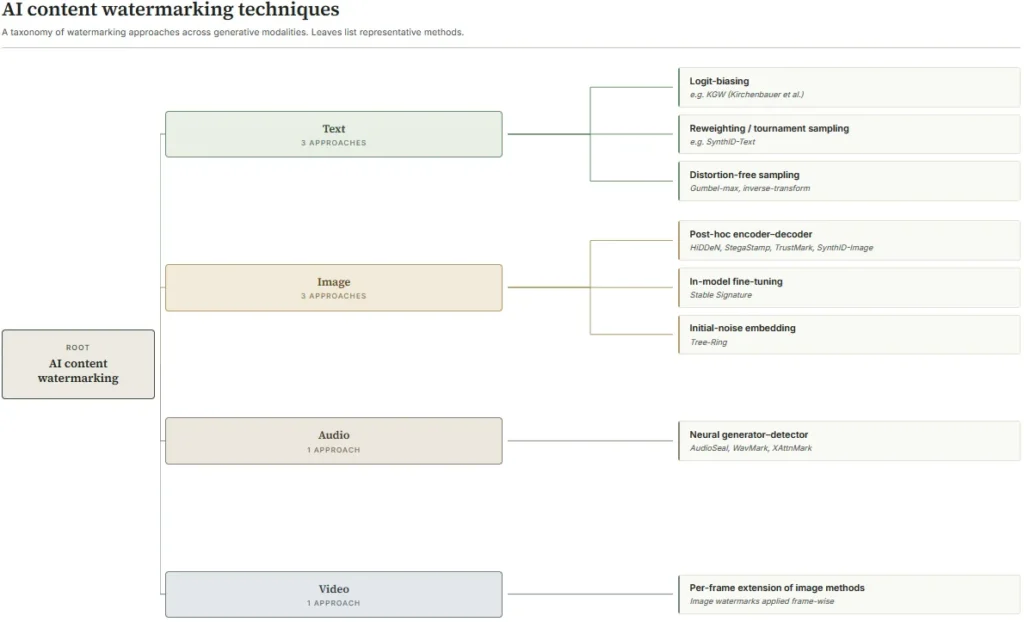 AI & MarketingInvisible AI: How to Maintain Brand Trust in the Era of Undetectable ContentAI content is everywhere and increasingly hard to detect. Learn how to maintain brand trust, comply with the EU AI Act, and avoid 'AI slop' in marketing 2026.Srp 1, 2026
Where is your marketing burning money?
AI audit and implementation for business owners. From diagnosis to deployment.
Get an audit